
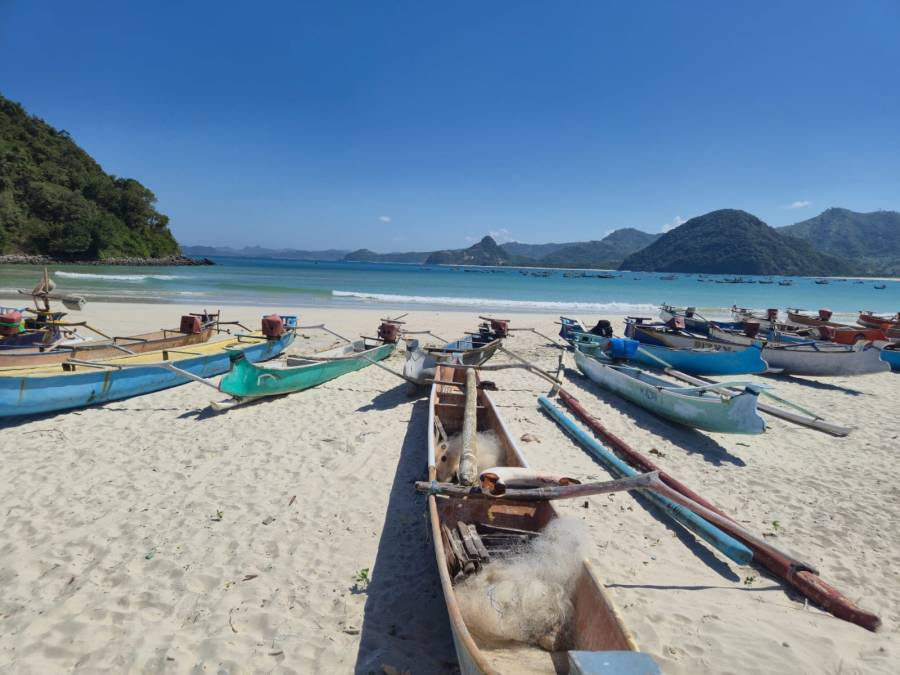
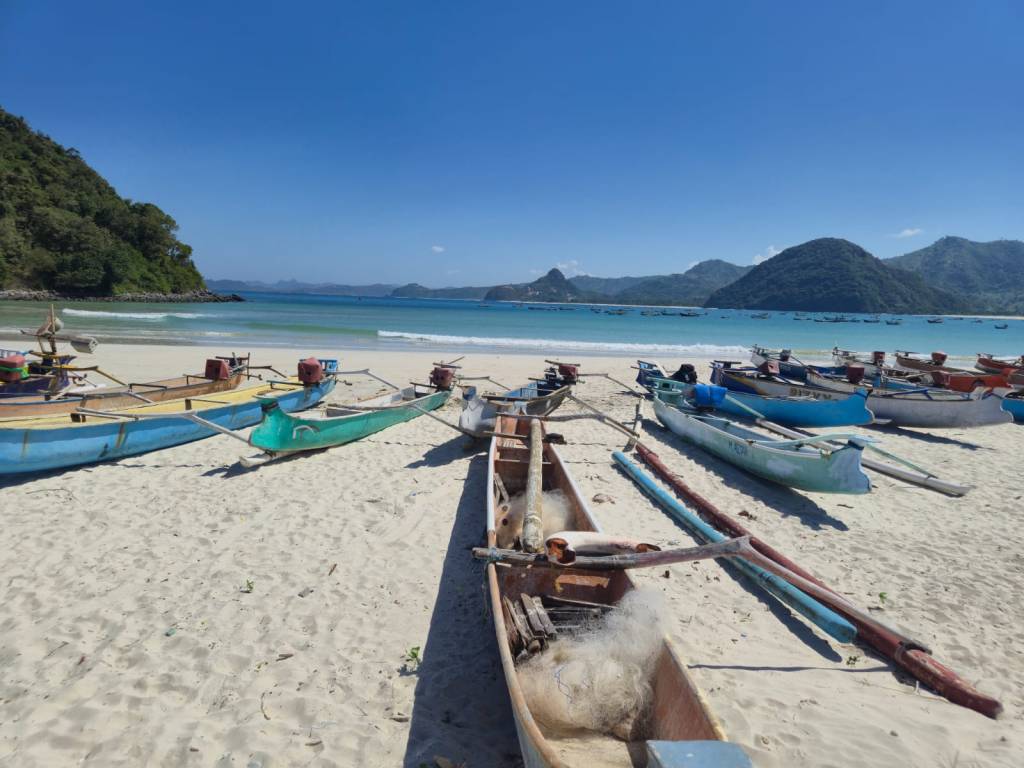
Located just next to Bali, Lombok is an island blessed with landscapes every bit as stunning as its famous neighbor, if not even more breathtaking. Yet despite its natural beauty, Lombok, Indonesia, receives far fewer tourists than Bali. When travelers visit Lombok, Indonesia, they tend to concentrate around Kuta in the south, drawn by its laid-back atmosphere and beautiful beaches, or head north to conquer the mighty Mount Rinjani. Others simply pass through Lombok on their way to or from the famous Gili Islands, spending a few days in Gili Trawangan, Gili Air, or Gili Meno.
But is Lombok really only worth visiting as a short stop before or after the Gilis? What happens when you venture beyond Kuta and Rinjani? What else is there to discover across the island? And most importantly, is Lombok worth staying longer for? To satisfy my curiosity, I decided to spend a full week traveling around Lombok, exploring beyond its most popular destinations to see what this beautiful island has to offer.
Lombok, Indonesia: A journey long overdue
Did I ever travel to Lombok? Yes, I did several times, although I had only scratched the surface, quite literally. The first time I went to Lombok, Indonesia in 2011, when I was supposed to fly to Bima in Sumbawa island, also in West Nusa Tenggara province. My office staff accidentally booked me a ticket to Mataram, which is located in Lombok island. And just like that, I got myself a free one-day vacation.
At the time, I was working as a TV journalist, so I was traveling with my cameraman. We decided to make the most of the unexpected detour, enjoying a short vacation in Lombok before continuing our journey to Bima to explore more of Sumbawa. It was a lovely little bonus trip that I still remember fondly. I even remember the hotel we stayed at and the pearls I bought as a souvenir.
My next visit was in 2018. Once again, I only scratched the surface. This time, Lombok was simply a transit point before embarking on a 4-day, 3-night liveaboard journey from Lombok to Labuan Bajo in Flores. My last visit was in 2019, when I spent just one night in Lombok, Indonesia before taking a fast boat to Gili Trawangan. Looking back, it took me quite a while to realize something: why had I always treated Lombok as a transit point instead of a destination worth exploring in its own right? Why rush through an island blessed with such incredible natural beauty?
So, after all these years, I decided it was finally time to find out what I had been missing.
What’s Lombok, Indonesia like?
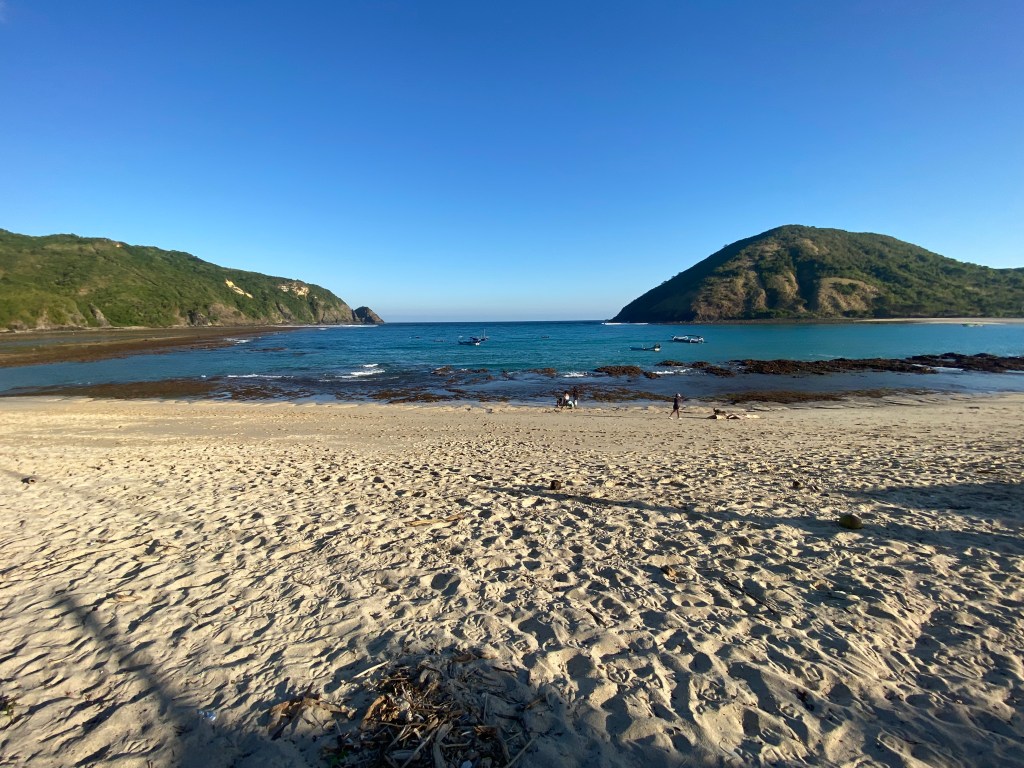
Adjacent to Bali and roughly similar in size, Lombok offers a different kind of island adventure. While Bali is known for its beaches, culture, nightlife, and bustling tourism scene, Lombok feels more spacious, raw, and untouched. The island is blessed with an abundance of white-sand beaches that, honestly, can feel even more idyllic and pristine than many of Bali’s. Many remain relatively quiet, rarely visited by tourists, and some still feel almost untouched.
One afternoon, we visited Mawun Beach, and I found myself completely captivated by the view. The wide stretch of powdery white sand curves gently between two limestone cliffs, overlooking crystal-clear turquoise water. Mawun is no longer a secret among travelers, but when we visited, there were still only a handful of people on the beach, something I had rarely experienced in Bali. After Mawun, we became slightly obsessed with discovering more of the beautiful beaches around Kuta, Lombok. And there were plenty to discover.
The views of Mawi Beach and Lancing Beach have stayed with me ever since. Both were remarkably quiet when we visited, with barely another soul around. Turquoise water, soft white sand, and that wonderful feeling of having an entire stretch of paradise almost to ourselves. This was the side of Lombok, Indonesia I had been missing all along.
If you plan to stay on the southern Lombok, Indonesia, those are the view you will discover. South Lombok is dry, the hills are more rugged and the vegetation more sparse. Especially around Kuta and the Mandalika area, the landscape is a striking mix of dry hills, limestone cliffs, open grassland and some of the island’s most beautiful beaches. But, if you decide to venture to the north and central Lombok, you’ll discover a dramatic change of scenery. The northern and central Lombok are greener and receive considerably more rainfall.
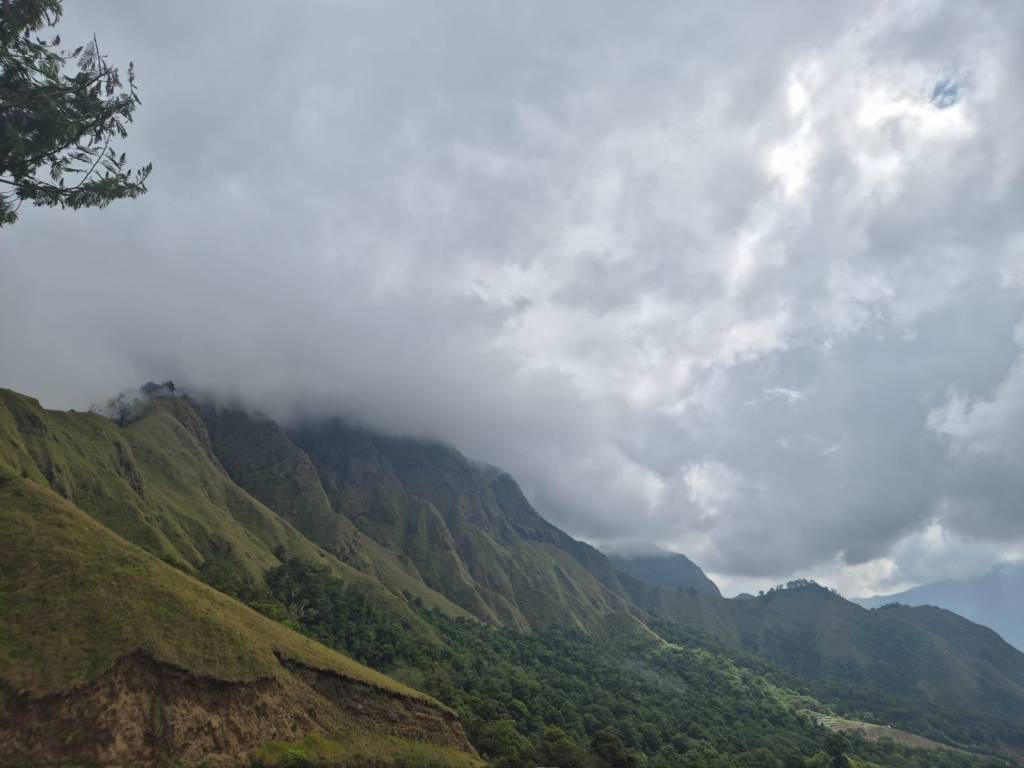
Lombok’s landscape is largely shaped by Mount Rinjani, the 3,726-metre volcano that dominates the northern part of the island. The mountain and the volcanic range surrounding it influence not only the island’s landscape, but also its rainfall, rivers, agriculture and even the character of its different regions. The volcanic soils and abundant water make the north and central Lombok are ideal for agriculture, with rice fields, vegetables, fruit, coffee and cacao growing around the mountain’s foothills. In these areas you will find spectacular waterfalls, clustered around the slopes and foothills of Mount Rinjani.
It is almost as if Rinjani divides Lombok, Indonesia into different worlds: a lush, mountainous north; fertile agricultural plains in the centre; and a drier, more rugged south facing the Indian Ocean.
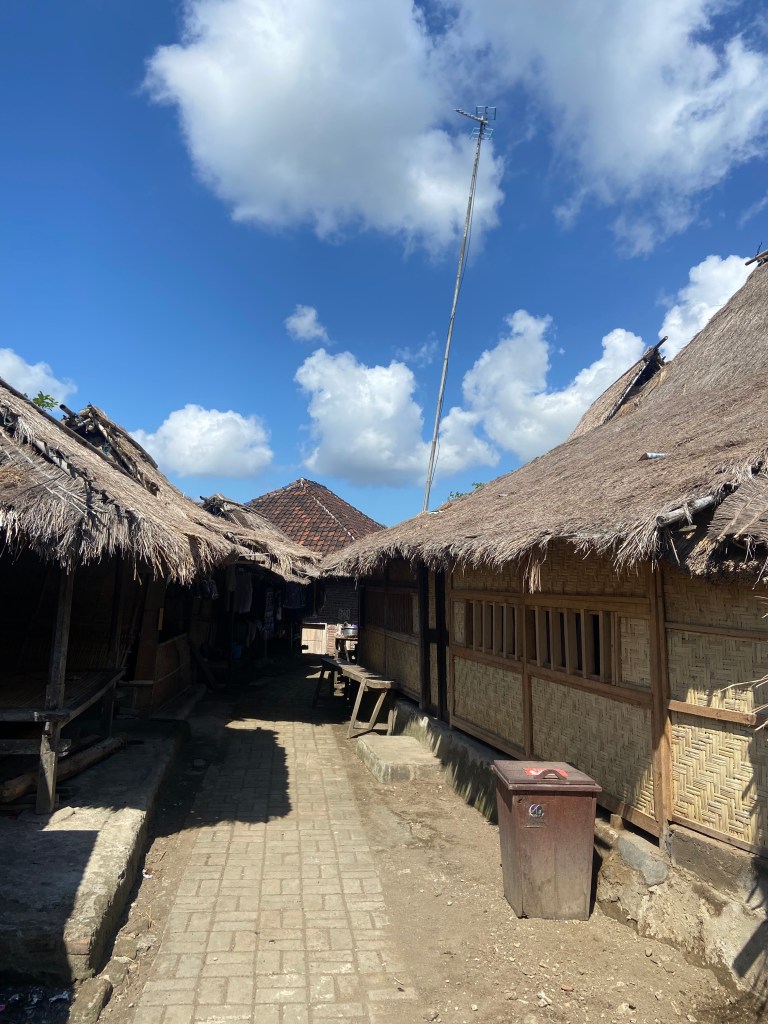
What about the people in Lombok? Unlike Bali, Lombok is predominantly Muslim. Of its nearly four million inhabitants, roughly 85–90% are Sasak, the indigenous people of Lombok. What I find particularly fascinating as a traveler is how visible Sasak culture still is in everyday life, from the language people speak and traditional houses to weaving, customs, and the way people dress. The Sasak people are Muslim, hence mosques and minarets are an unmistakable part of the island’s landscape, earning Lombok its nickname, “the island of a thousand mosques.”
A significant number of Balinese also call Lombok island as their home, particularly in Western Lombok and Mataram, the capital city of West Nusa Tenggara province. Many Balinese families have lived here for generations, alongside people from other parts of Indonesia and communities of Arab-Indonesian descent. For me, this cultural contrast was one of the most interesting things to observe during my journey. In Sembalun, at the foothills of Mount Rinjani, I noticed how modestly people dressed and how deeply Muslim traditions were woven into everyday life. Yet in other parts of the island, particularly around Mataram, I came across Balinese temples, traditional houses, and Hindu ceremonies. This cultural mix makes Lombok particularly fascinating to explore.
How to go to Lombok, Indonesia?
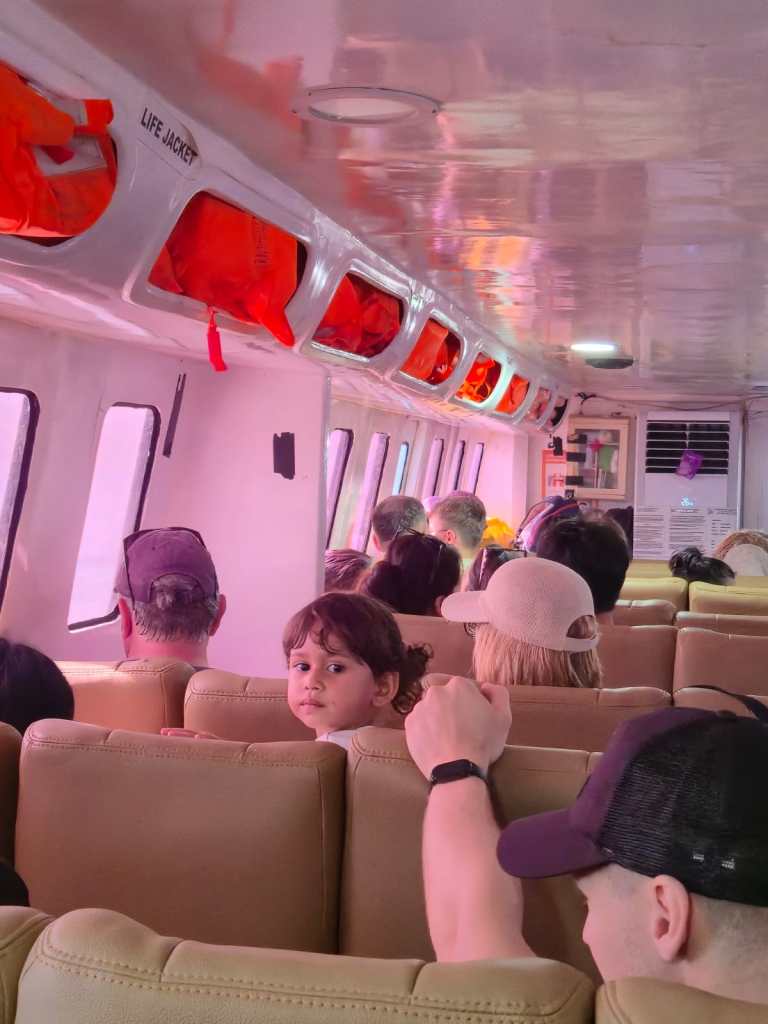
My friends from Lombok told me that they always travel between Lombok and Bali by boat, either by public ferry or fast boat. Coming from the mainland, I rarely travel by boat, so although Lombok has an international airport called Zainuddin Abdul Madjid Lombok International Airport (LOP), I decided to take the boat option for this trip. And since we didn’t want to travel all the way to Padang Bai Harbor, I opted for a fast boat ticket through Perama Tour instead of taking the public ferry. The ticket was IDR 400.000,- per person. Our fast boat was scheduled to depart from Sanur Harbor and takes three hours to reach Bangsal Harbor in Lombok, while the public ferry usually takes around four to five hours to arrive. Overall, the journey to Lombok was fine, although there was a bit of annoyance along the way. The original operator, Sanur Fast Cruise, suddenly announced that they wouldn’t be operating our trip and moved all the passengers, including us, to another boat called Wijaya Buyuk. The boat was old and rather small, but thankfully, we arrived safely in Bangsal.
On the way back to Bali, as I had expected, we were once again transferred to Wijaya Buyuk. There was nothing particularly wrong with the journey at first, but somewhere between Lombok and Bali, the waves became noticeably bigger and started crashing against the boat repeatedly. Things got pretty intense for a while, the boat was rocking quite heavily, and seawater even came inside. Thankfully, the rough conditions didn’t last forever, and the rest of the journey was relatively smooth. Our next challenge came when we arrived outside Sanur Harbor. Online taxis are not allowed to pick up passengers directly from the harbor, so we had to drag our bags all the way to the main road before we could order a Gojek or Grab car.
As soon as we reached the road, several freelance drivers approached and tried to convince us to use their services. One of them even showed us a “fake” fare on their Gocar/ Grab car app. I knew it was inflated because I frequently take online taxis from Icon Mall Sanur to my home, and the fare is usually around IDR 150,000,-. But by that point, we were exhausted and carrying a lot of bags, so I negotiated a little and eventually accepted the overpriced fare just to get home.
Well, lesson learned. Next time we travel to Lombok, I’ll take a flight instead. It will definitely save us time and hassle, especially when traveling with a toddler.
If you’re coming to Lombok, Indonesia from Bali, besides taking a flight and a fast boat from Sanur Harbor, you can opt taking a public ferry or fast boat from Padang Bai Harbor. If you’re coming from the Gili Islands, you can reach Lombok from all three of the Gili Islands via a short boat ride to the small port of Bangsal.
How to get around Lombok, Indonesia?
Traveling around Lombok, Indonesia, sometimes feels a little like traveling back in time. In Kuta, Lombok, where we stayed, ride-hailing services were banned, so we had to rent a motorbike to get around. A standard scooter costs around IDR 70,000–100,000 per day, while public transportation was practically non-existent. I’m used to exploring Bali by motorbike, so getting around Kuta wasn’t a problem for me. But riding a motorbike with a toddler is a completely different story.
The roads around Kuta were quite dusty, especially the bumpy, unpaved roads through the villages. Finding a children’s helmet was another challenge. It was surprisingly difficult to find a shop selling kids’ helmets in Kuta, the nearest one we could find was about 30 minutes away, closer to Mataram. In the end, we found a children’s equipment rental place, which was where we managed to get a helmet for Aimee. Whenever we ventured beyond Kuta, I preferred to rent a car with a driver. For example, we hired a car and driver to take us to Sembalun, at the foothills of Mount Rinjani, for IDR 800,000. The journey between Bangsal Harbor and Kuta cost us IDR 550,000 each way. Our driver, Kadek, was very nice & knowledgable. His hospitality, helpfulness, and local knowledge made our trip around Lombok so much more enjoyable. I’ll leave his number here +62 852 3933 6699 in case you’re looking for a reliable driver and want to have a great experience exploring Lombok, too.
Ride-hailing services like Grab and Gojek are available in parts of Lombok, particularly around Mataram, Senggigi, and Lombok International Airport, but they are much less reliable than in Bali, especially around Kuta and rural areas. So, while getting around Lombok is relatively easy if you’re comfortable riding a motorbike, traveling with a young child, or simply wanting to explore further afield is much more convenient with a car and driver.
Where to stay in Lombok, Indonesia?
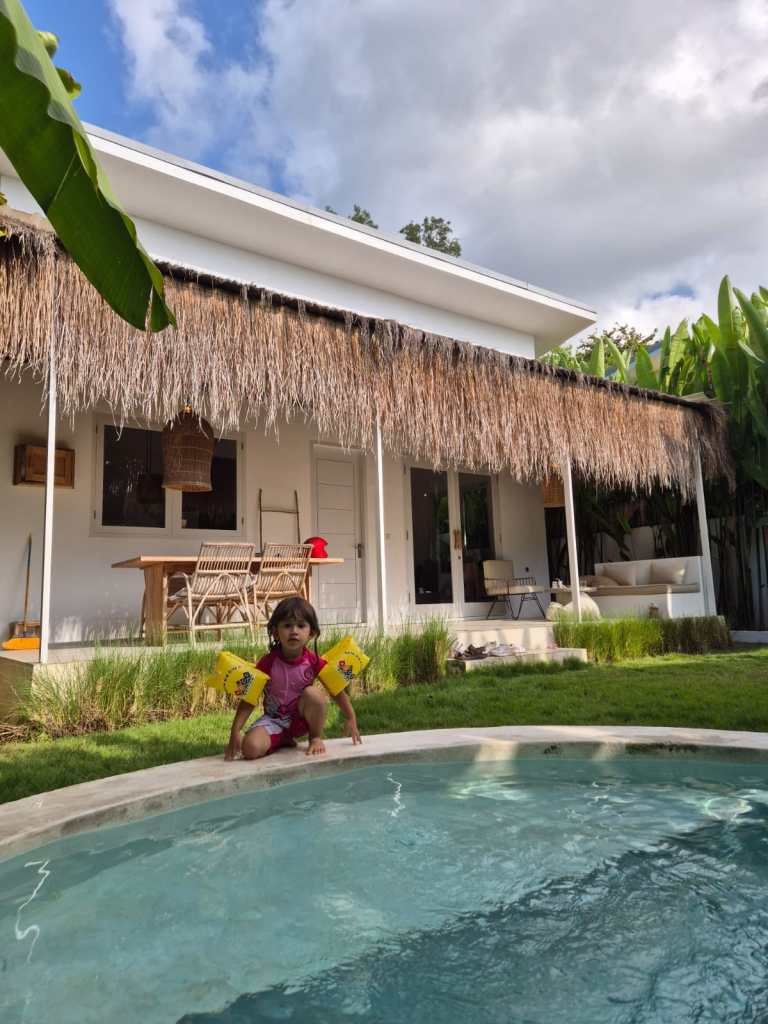
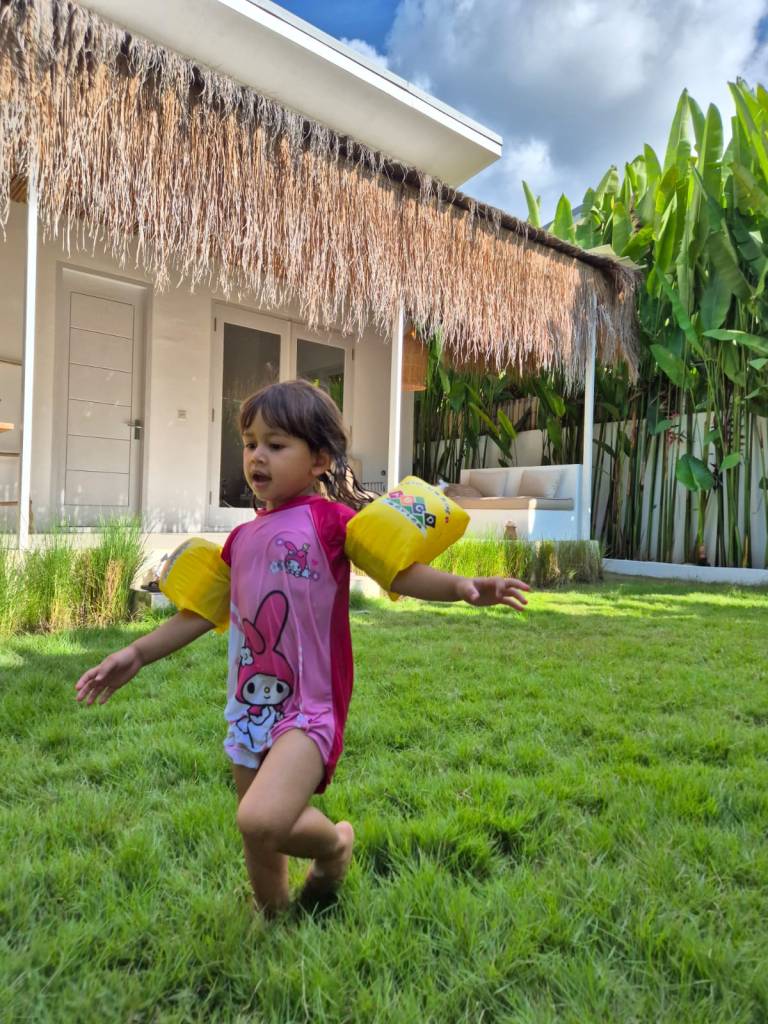
For seven days, my family and I stayed at Casa Coco I, located about 10 minutes from the center of Kuta town. I chose to stay in a villa because we needed plenty of space for my daughter to play, and a two-bedroom villa was perfect for us and our nanny. It also turned out to be a good decision, as I found very few family-friendly destinations, playgrounds, or restaurants in Kuta, Lombok, apart from one place.
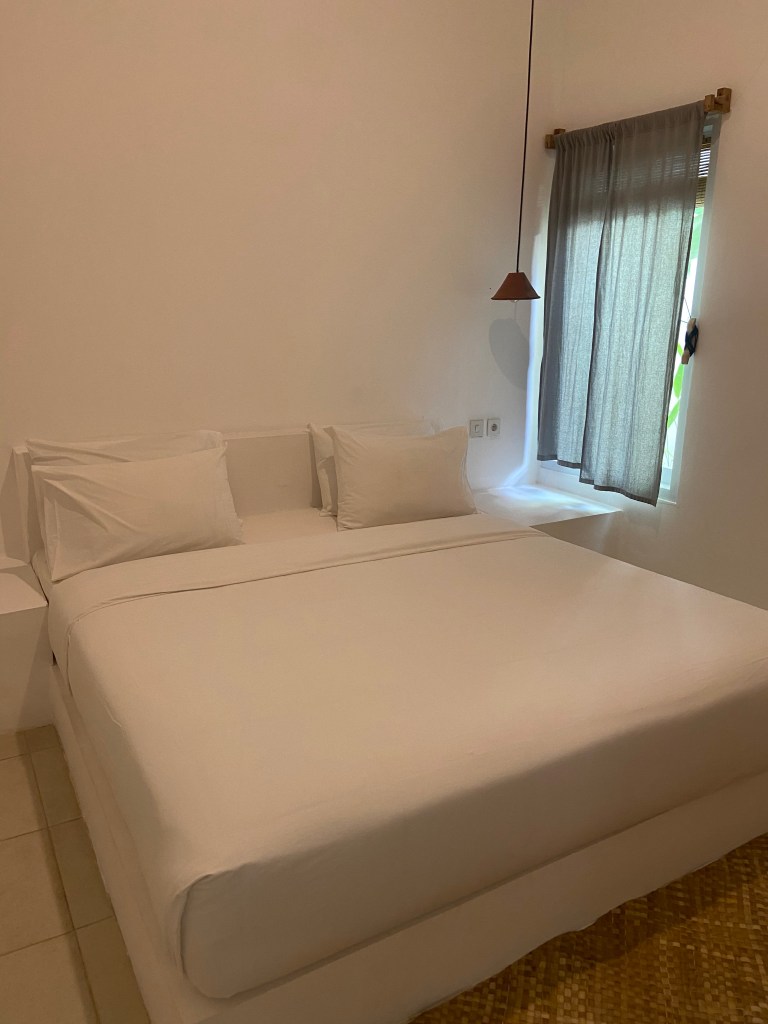
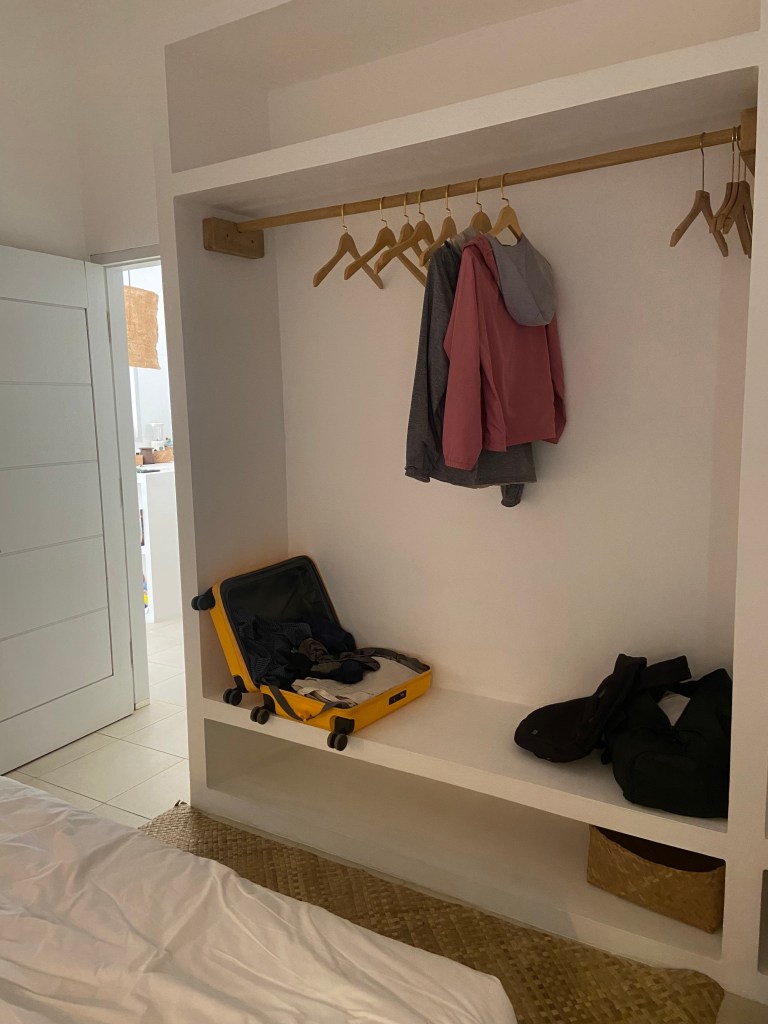
The villa was nice and spacious, and the staff were very helpful. They even provided some additional appliances, such as a juicer and a water dispenser, and helped us arrange a motorbike rental. The owner of the villa is actually Spanish. I had heard that quite a few Spanish people have invested in Kuta, so I couldn’t help but wonder…
There are other accommodation options besides villas in Kuta, Lombok, if you prefer staying in a hotel. I noticed several large, international hotel chains around the Mandalika International Circuit, so you can still find more conventional hotel options in the area.
If you prefer a larger, more peaceful resort, however, Senggigi might be a better choice. Located on the western coast of Lombok, Senggigi is the island’s principal and longest-established resort area and tourist hub. Stretching along approximately 10 kilometres of coastline just north of Mataram, it has long been a popular base for travelers looking for a more relaxed place to stay. Senggigi is also conveniently located for travelers heading to the Gili Islands, so many visitors use it as a comfortable home base or a stopover before taking a boat to Gili Trawangan, Gili Air, or Gili Meno.
I’ve stayed in Svarga Resort during my previous trip to Lombok. It had spacious rooms, and I particularly loved having breakfast there while overlooking the port and the ocean. It was such a relaxing way to start the day. Another advantage is that Svarga is located quite close to the departure point for fast boats to the Gili Islands, making it a convenient option if you’re planning to continue your journey to the Gilis.
Things to see & do in Lombok, Indonesia
- Discovering untouched beaches
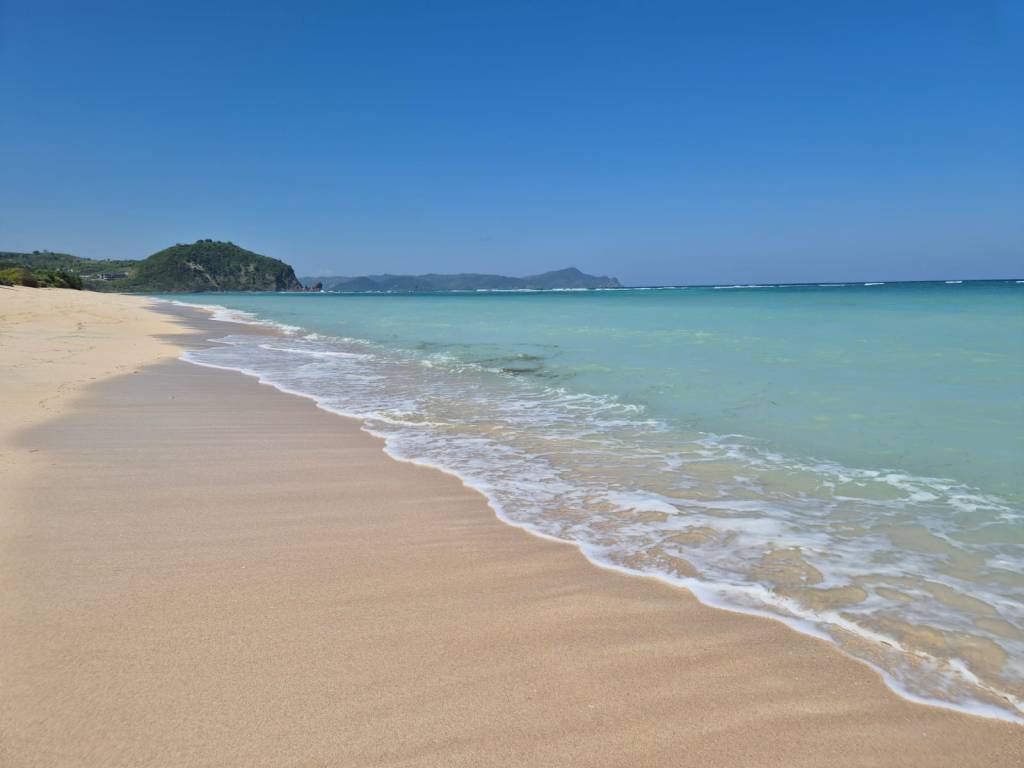
I live not too far from the beaches in Bali, but all of those beaches have black sands. So, when we arrived in Lombok, Indonesia, one of the first things to do is to discover white sand beaches around Kuta, Lombok.
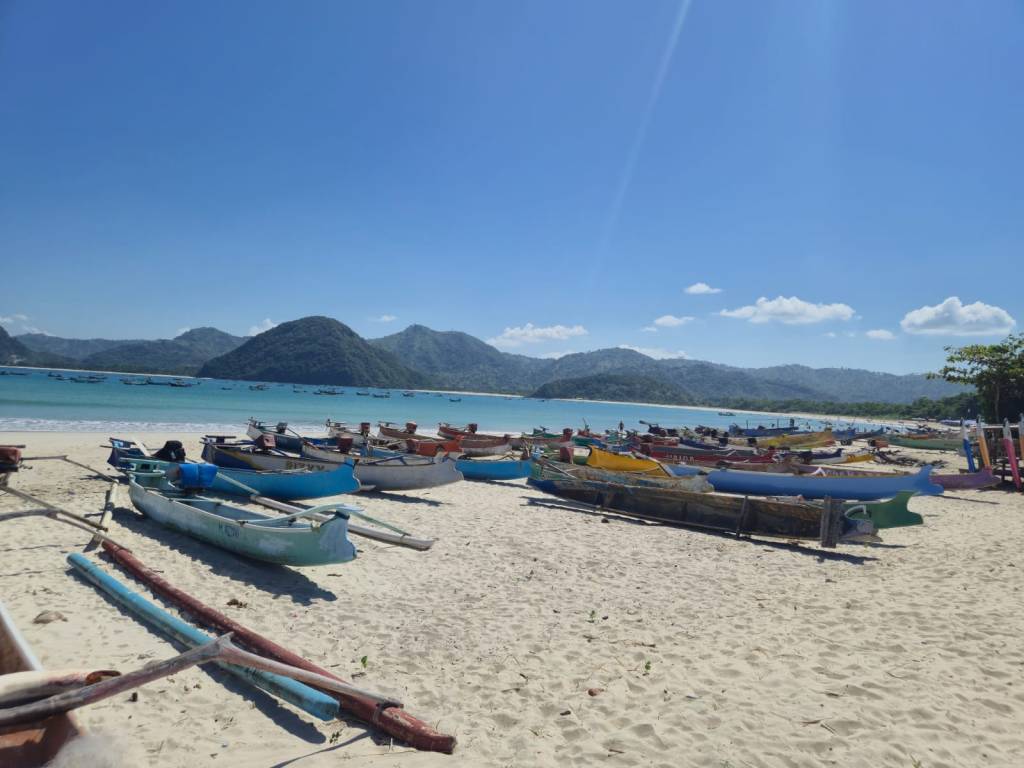
The first one I and my family visited is Mawun Beach. It was the first beach that really impressed me during the trip. Tucked between two green, rugged hills, the beach forms a beautiful crescent of soft white sand overlooking clear turquoise water. The sheltered bay makes the water relatively calm, while the surrounding hills give Mawun a secluded, almost cinematic feeling. Although it has become more popular, it was still surprisingly quiet when we visited, with only a handful of visitors enjoying the beach.
We took our time here, sitting at one of the beachside warungs, sipping fresh coconuts and juice. Suprisingly, the coconut tastes way better than Bali, more fresh and sweet. As I looked around, I couldn’t help but wonder: how could a beach as spectacular as Mawun still be visited by only a handful of people? Not that I want it to become crowded, I actually love that it remains so peaceful. But in my opinion, Mawun definitely deserves more recognition.
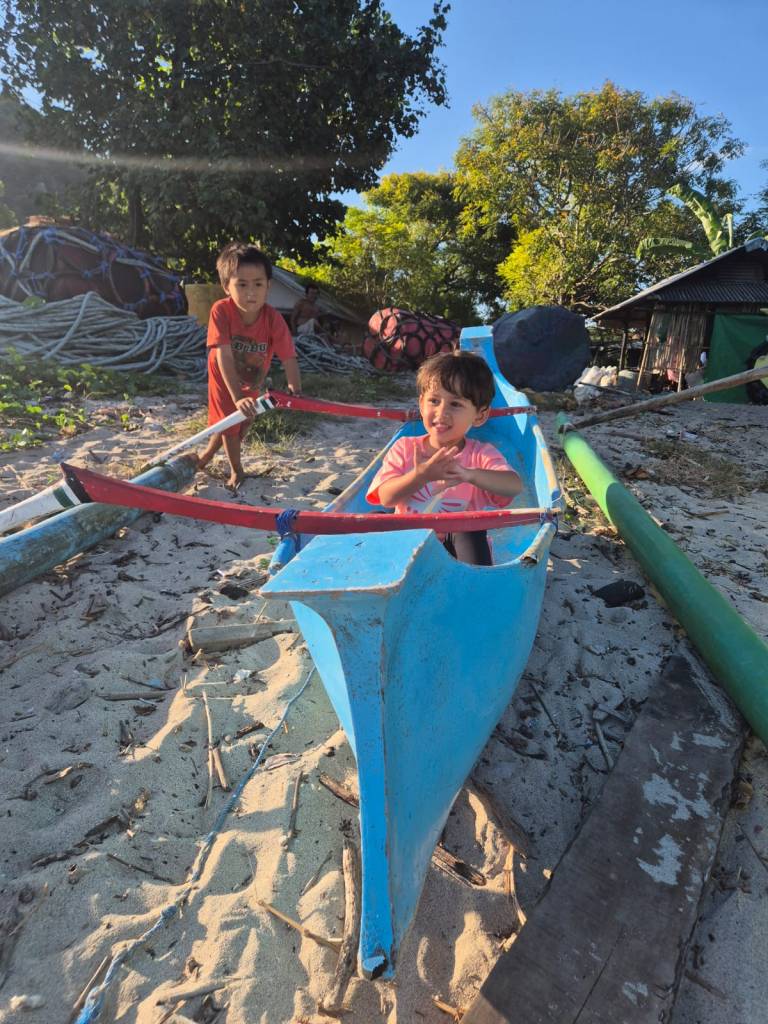
From a distance, I also spotted a few people riding jet skis. The price was 500.000 for a 10-minute ride. It looked like a pretty fun way to enjoy the turquoise water and take in the beautiful scenery of Mawun from a different perspective.
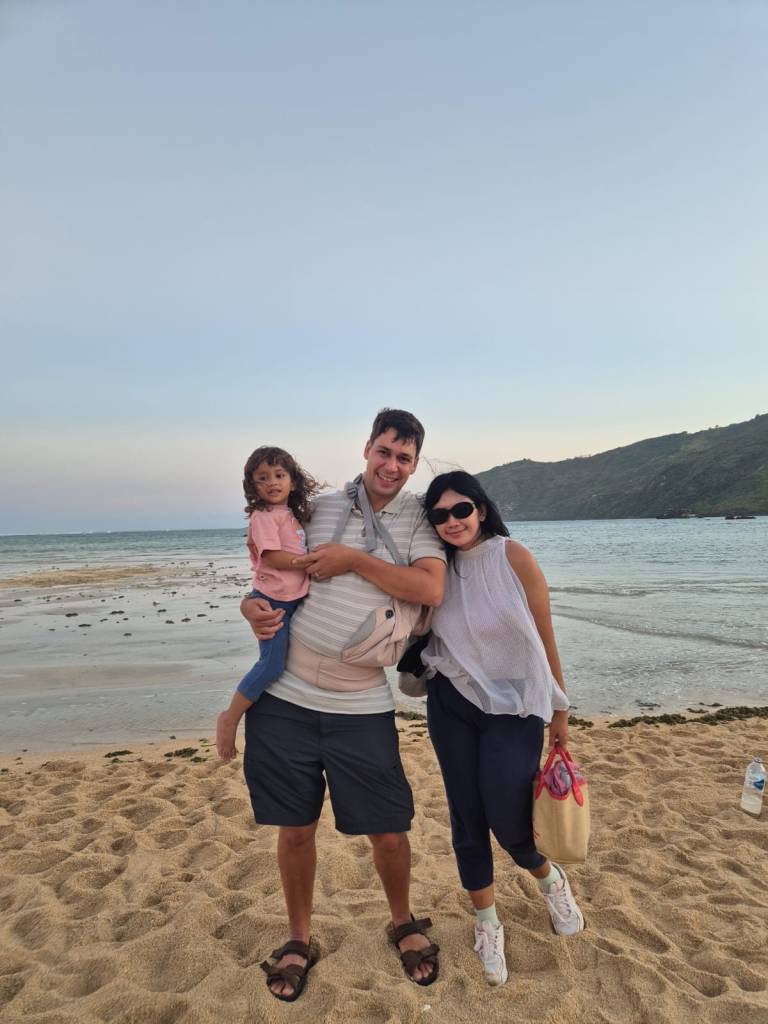
On the next day we went to Kuta Lombok Beach, and I am a bit suprised since it looked totally different than last time I went there. Despite sharing its name with Bali’s famously busy Kuta Beach, Kuta Beach in Lombok feels like a completely different world. Located right in the heart of Kuta village, it has a long stretch of white sand and clear blue water, with hills framing the coastline in the distance. The beach is easily accessible from the town and is a popular spot for watching the sunset or simply taking a stroll along the shore. It may not feel as secluded as some of the beaches further away, but its convenient location makes it a natural starting point for exploring southern Lombok.
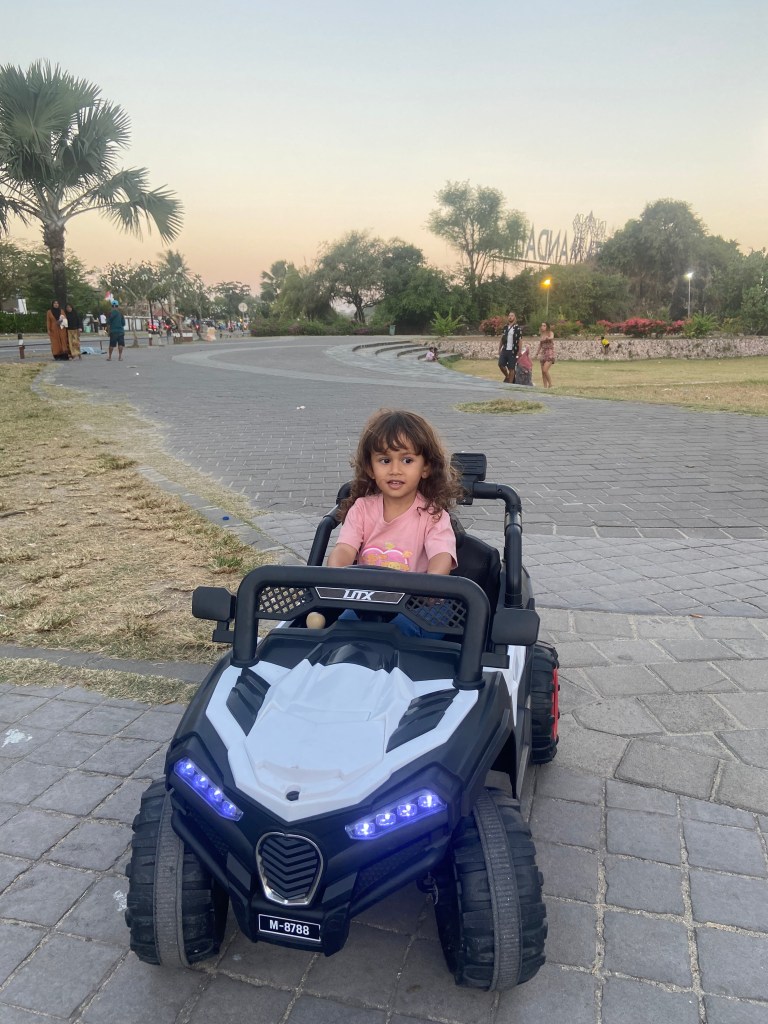
Kuta Beach is probably the most crowded beach in Lombok. When we visited, there were plenty of local visitors enjoying the beach alongside international tourists. What I particularly liked, especially when traveling with a child, was the small playground and kids’ car rentals available there, which gave my daughter something to keep her entertained while we enjoyed the beach.
Of course, being one of the more popular beaches also comes with a downside. There was quite a bit of rubbish scattered around the beach, which was honestly a little sad to see. I hope better waste management and awareness can keep this beautiful coastline clean as more visitors discover it. Another advantage of Kuta Beach is its location. It is quite close to the main restaurant area in Kuta, so after spending the afternoon at the beach, you can simply walk back toward town and find plenty of options for dinner.
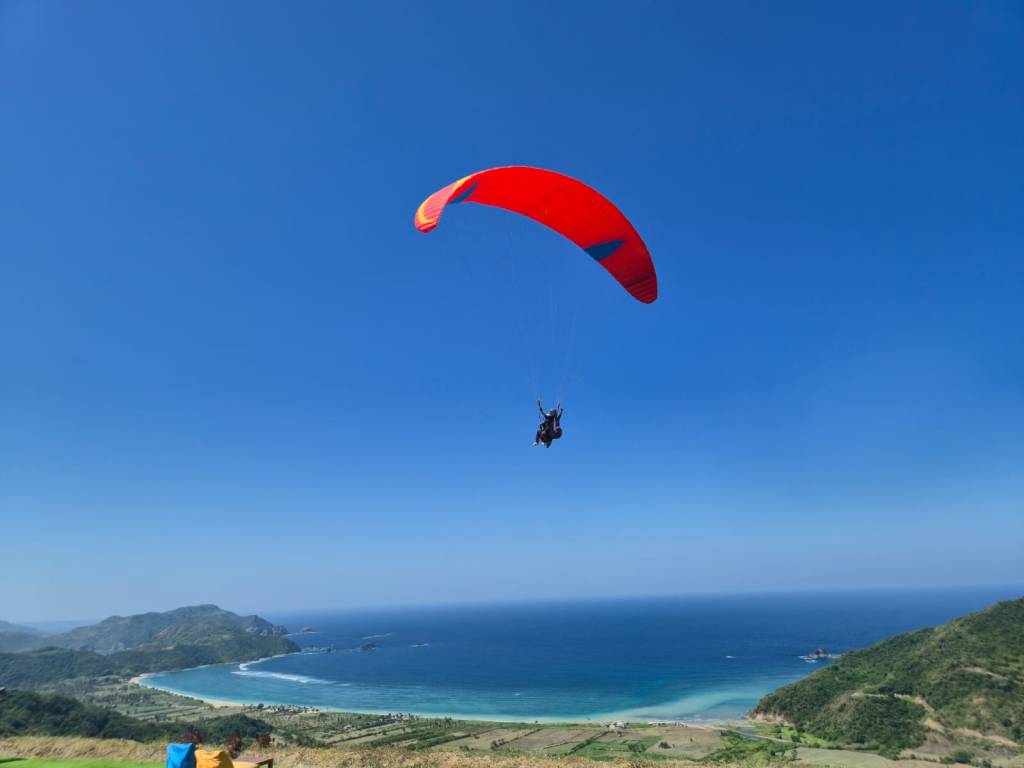
Another beach in Lombok, Indonesia worth discovering is Lancing Beach. It’s another beautiful and relatively quiet beach on Lombok’s southern coast. Surrounded by rugged hills and open landscape, it has soft white sand and clear turquoise water that feels almost unreal on a sunny day. What I loved most about Lancing was the sense of space, we barely saw anyone when we visited, which made the beach feel wonderfully peaceful.
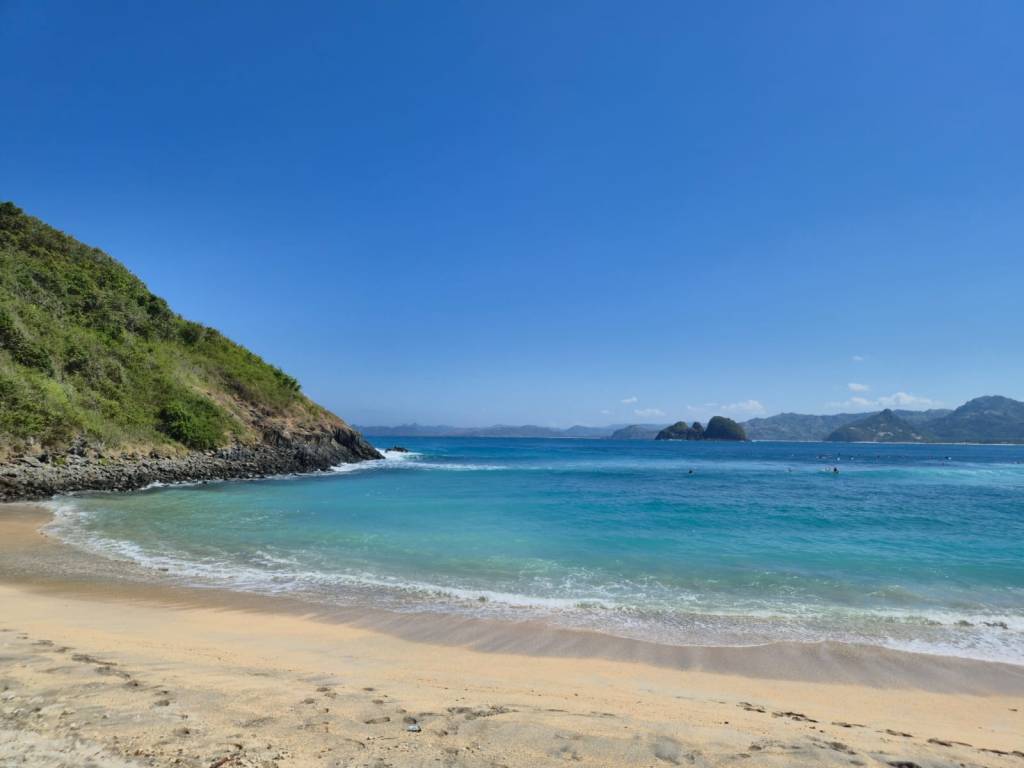
Meanwhile, Mawi Beach is the kind of place that makes you wonder why you haven’t heard more about Lombok, Indonesia. Reaching it requires driving along smaller, rougher roads before descending toward the coast, but the effort is rewarded with a beautiful stretch of white sand surrounded by dramatic green hills. Mawi is particularly popular with surfers because of its waves, but even if you don’t surf, the scenery alone is worth the trip. When we visited, the beach was remarkably quiet, with very few people around, making it one of my favorite stops around Kuta.
Some other beaches worth visiting around Lombok include Tanjung Aan, Selong Belanak, Semeti, and Pink Beach. If you haven’t been to the infamous Pink Beach in Komodo National Park, then you should definitely make time for the one in Lombok. Known locally as Pantai Tangsi, Pink Beach is one of Lombok’s most uniques beaches. Its distinctive pinkish sand comes from tiny fragments of red coral mixing with the white sand, creating a beautiful blush-colored shoreline that contrasts dramatically with the turquoise water. The scenery is quite spectacular, and getting there is part of the adventure. The drive takes around 1.5 hours from Kuta Lombok, much of it along small and bumpy roads, but trust me, the journey is worth it for the beauty waiting at the end.
2. Merese Hill
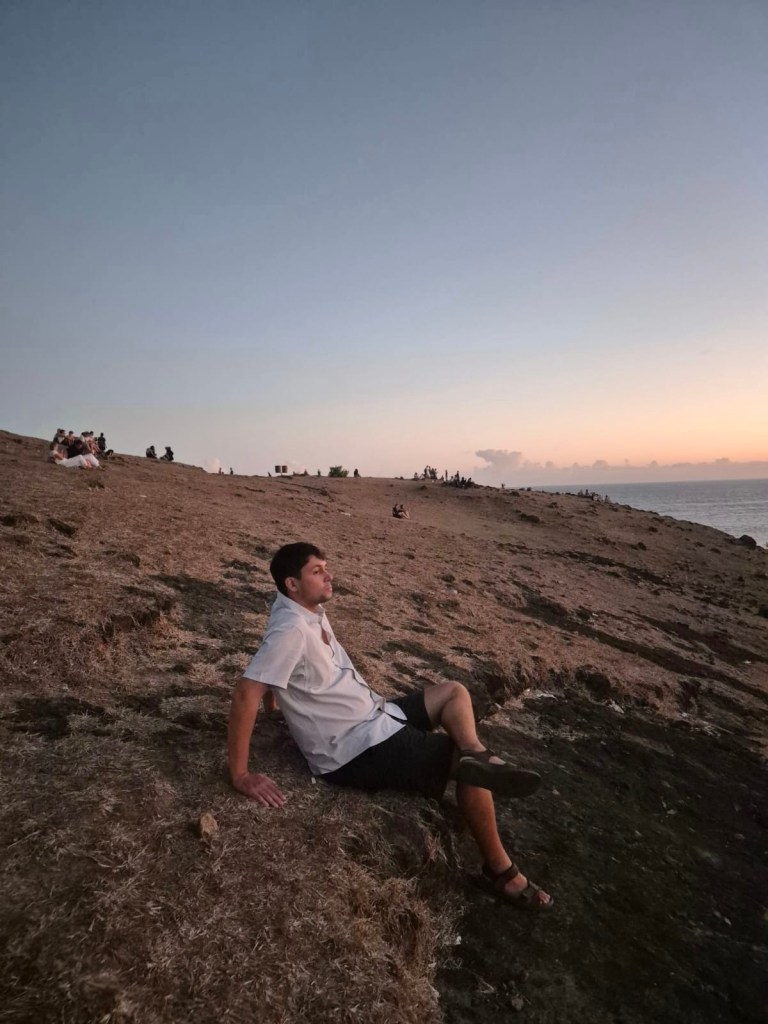
The one place that made me ask myself, “Why didn’t we come here sooner?” was Merese Hill. Just a 10-minute motorbike ride from Kuta, Merese Hill offers a spectacular panoramic view over the Indian ocean and the beautiful coastline of Tanjung Aan. No wonder it is such a popular sunset spot, and when we visited, it was already packed with visitors.
Merese Hill, or Bukit Merese in Bahasa Indonesia (bukit means hill), sits at the eastern end of Tanjung Aan Beach in Sengkol, Central Lombok. The hill separates two beautiful crescent-shaped bays, so from the top, you can see stretches of white sand and turquoise water on both sides. Facing the Indian Ocean, it is also perfectly positioned for sunset, with the sun setting over the water to the west. Put it all together, ocean, beaches, rolling green hills and sunset, and it’s easy to understand why Merese Hill has become one of Lombok’s most popular viewpoints.
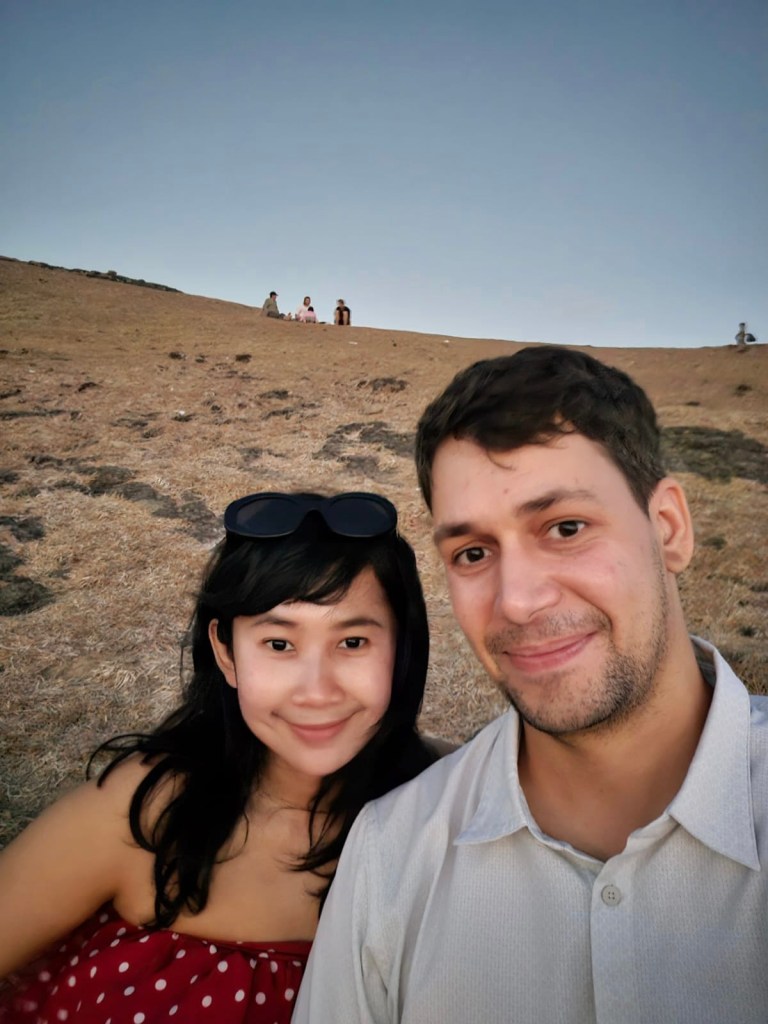
We arrived slightly after sunset, so unfortunately, we missed the golden hour. Even so, I found the view absolutely breathtaking. It was one of those places where I immediately wished we had come earlier. If you’re staying in Kuta Lombok, I’d definitely recommend putting Merese Hill on your itinerary, even if it’s one of the first places you visit in Lombok.
For the best experience, visit during the dry season, roughly from April to September, when the weather is generally more favorable. Sunset usually falls between around 6:10 and 6:40 PM, depending on the time of year, so I’d recommend arriving 45–60 minutes beforehand. That way, you have plenty of time to walk up the hill, find a good viewpoint, and enjoy the golden hour before the sun disappears over the horizon.
Entrace fee: free, just pay the parking fee IDR 5.000/ scooter.
3. Exploring Kuta town
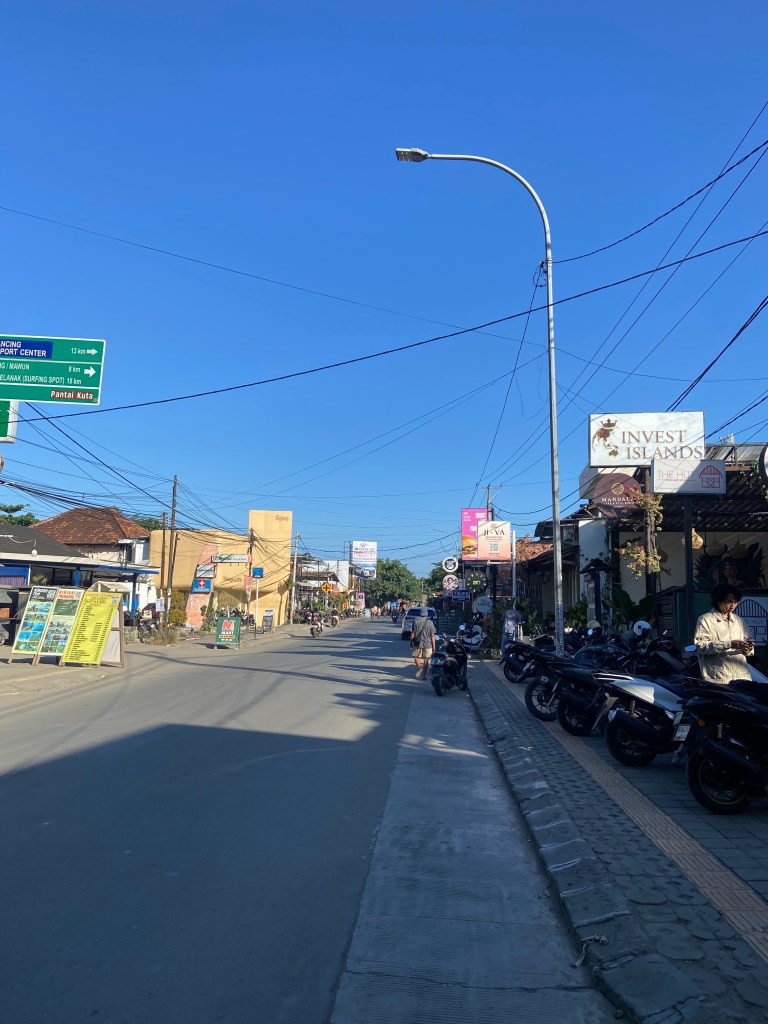
Once a sleepy seaside village, Kuta has been rapidly developing into the main tourist hub of southern Lombok. From the moment I arrived in Kuta Lombok, I immediately felt a vibe similar to Canggu a few years ago, back when it was developing quickly but hadn’t become overwhelmingly busy yet. Western-style cafés and restaurants now line the main streets, alongside gyms, spas, nail salons, coworking spaces, and pilates studios. Everywhere we went, there seemed to be construction underway, with new villas, hotels, and other businesses being built. It was a clear sign that Kuta is changing fast as more international travelers choose not only to visit, but also to stay longer in this part of Lombok.
But rapid development also comes with its downsides. Kuta felt noticeably dusty, particularly once we ventured away from the main streets.
As a base for exploring southern Lombok, however, Kuta is hard to beat. It puts you within easy reach of some of the island’s most beautiful beaches and surfing spots. The atmosphere is fun and adventurous, and it seems relatively easy to meet other travelers here. I also really enjoyed the variety of restaurants and coffee shops. I found myself surprisingly productive working from cafés such as Milk and Kenza. I’ll share about the best cafes and restaurants in Kuta, Lombok in the next blog post, though.
For families traveling with young children, though, I don’t think Kuta is quite there yet. Family-friendly facilities are still very limited, and during our stay, The Well was the only restaurant we found with a proper playground. Once you leave the main roads, many of the village streets are still unpaved and dusty, with few sidewalks, making getting around with a small child more challenging.
The dust was probably the biggest issue for us. Since we were traveling around Kuta by motorbike, my daughter was exposed to quite a lot of it and ended up developing a cough during our stay. It made me realize that while Kuta Lombok is already a fantastic destination for surfers, couples, solo travelers, and adventurous visitors, there is still plenty of room for the town to become more comfortable and convenient for families. If you’re traveling with young children, I suggest you stay in Senggigi instead.
4. Visiting Sembalun at the foot of Mount Rinjani
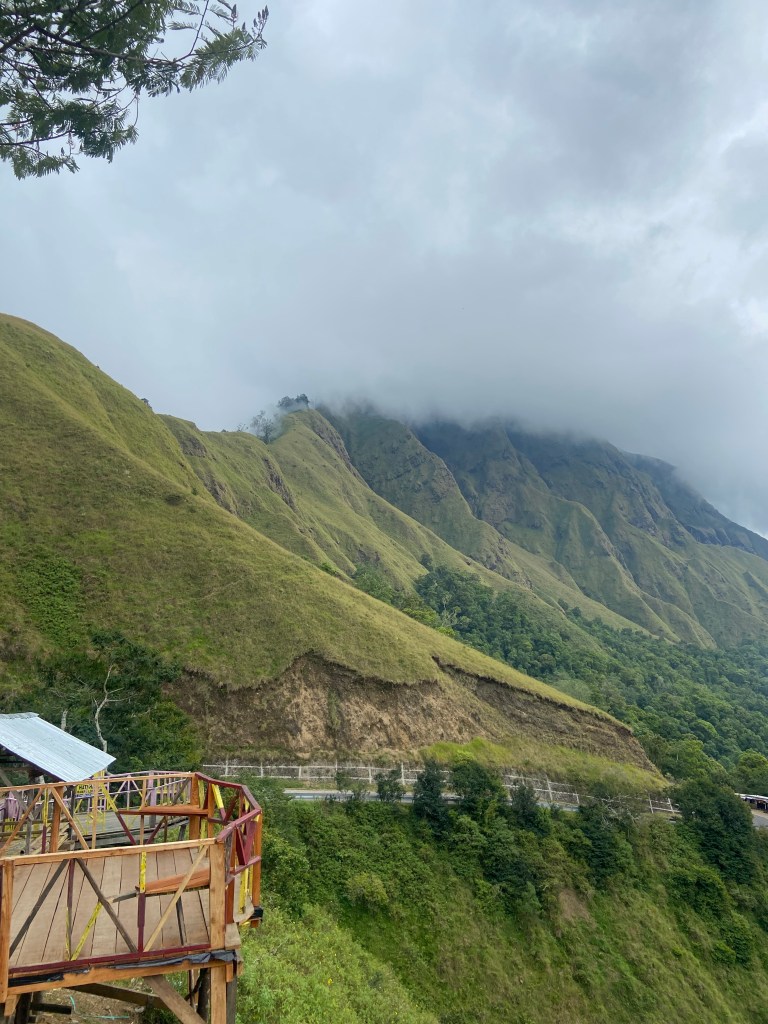
Home to Indonesia’s second-highest active volcano, Lombok has long attracted adventurous travelers hoping to hike the mighty Mount Rinjani. Rinjani has tempted both me and Adrien, too, but since we didn’t have enough time and definitely didn’t bring the right equipment, we decided to visit Sembalun instead. My local Lombok friends had repeatedly told me that Sembalun was one destination I shouldn’t skip. So, from Kuta, we started the roughly 3.5-hour journey to this beautiful highland area at the foot of Mount Rinjani.
Sembalun is a scenic highland district in East Lombok, known for its cool climate, vast agricultural landscapes, rolling hills, and dramatic mountain views. It serves as the primary starting point and trekking route for climbers heading up to Rinjani’s summit and crater lake. Sitting within an ancient volcanic landscape at an elevation of around 800 to 1,200 metres above sea level, Sembalun is particularly popular among local visitors looking to escape Lombok’s tropical heat. As our car climbed higher into the mountains, I noticed the scenery changing dramatically. The rugged hills and dry landscapes we had become familiar with in southern Lombok gradually disappeared, replaced by fertile farmland, lush vegetation, and rolling green hills. Even the dusty roads were gone. Instead, we rolled down the windows to breathe in the wonderfully cool, fresh mountain air.
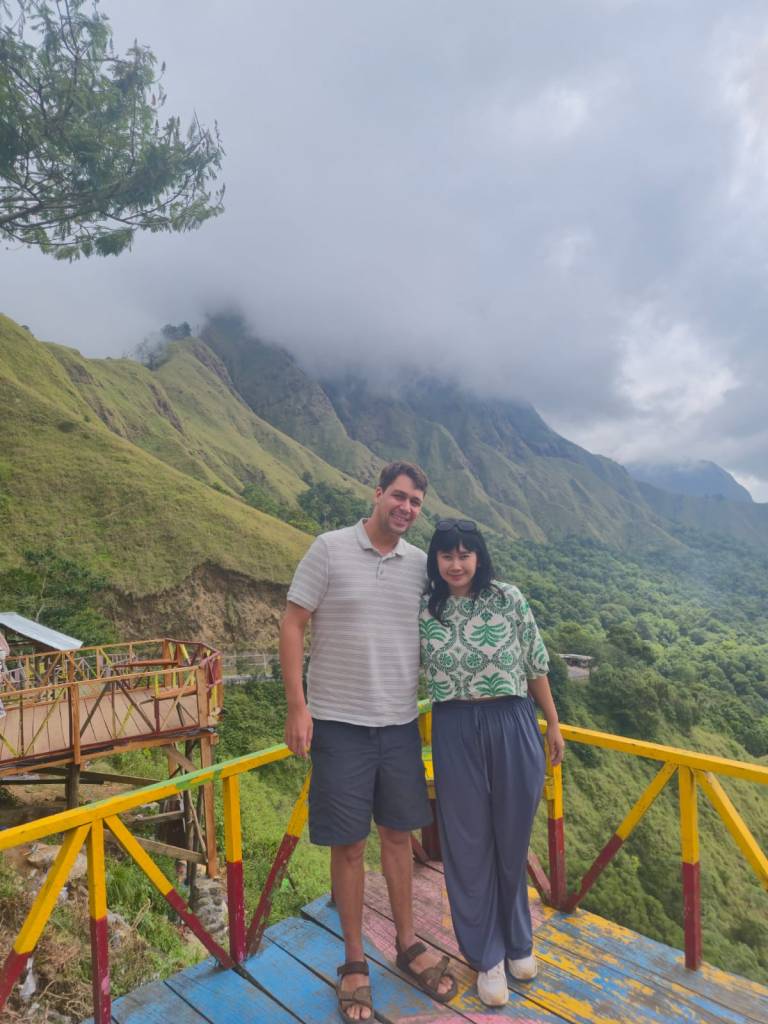
At one point, we stopped to enjoy the scenery at Taman Wisata Pusuk Sembalun, a viewpoint offering panoramic views across the Sembalun Valley. It was rather cloudy when we visited, so the mountains weren’t completely visible, but I still found the view spectacular. There were also several small warungs around the viewpoint where you could warm yourself up with a cup of hot tea and a bowl of instant noodles before continuing the journey.
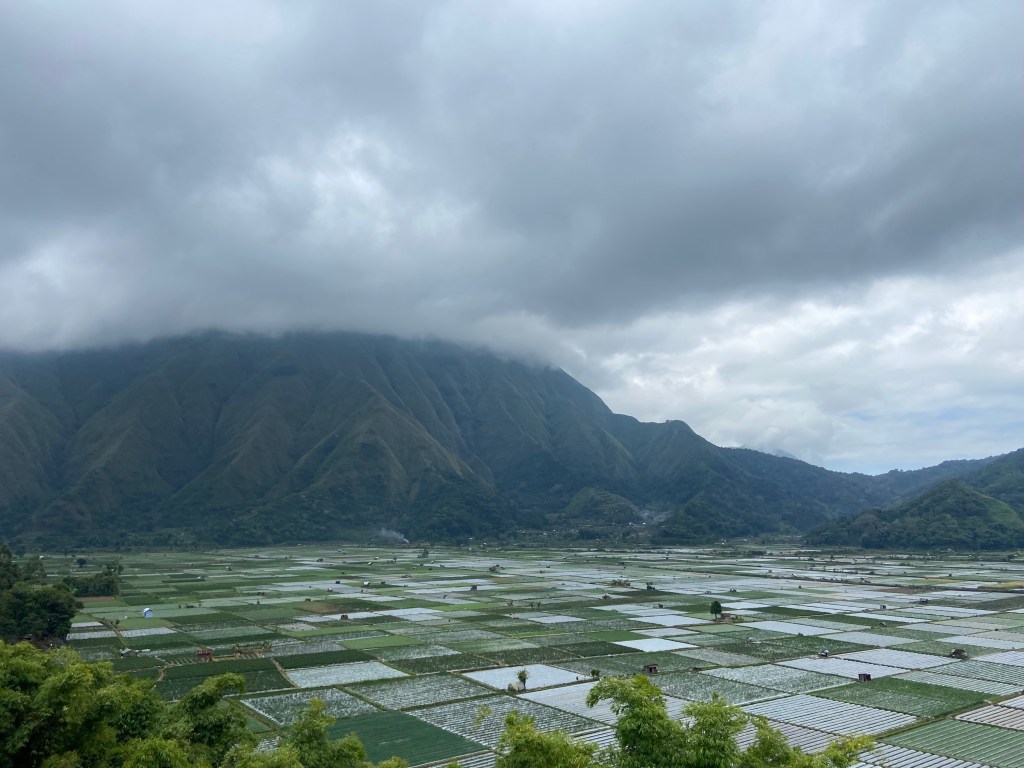
Our second stop was Bukit Selong, one of Sembalun’s most popular viewpoints. From here, you can look down over a beautiful patchwork of agricultural fields in different shades of green, with traditional houses scattered across the valley and mountains rising dramatically in the background. We only had to walk uphill for about five minutes to reach the viewpoint, making it a very easy stop even if you’re not in the mood for a proper hike. There is another viewpoint higher up the hill if you want an even wider view of the valley.
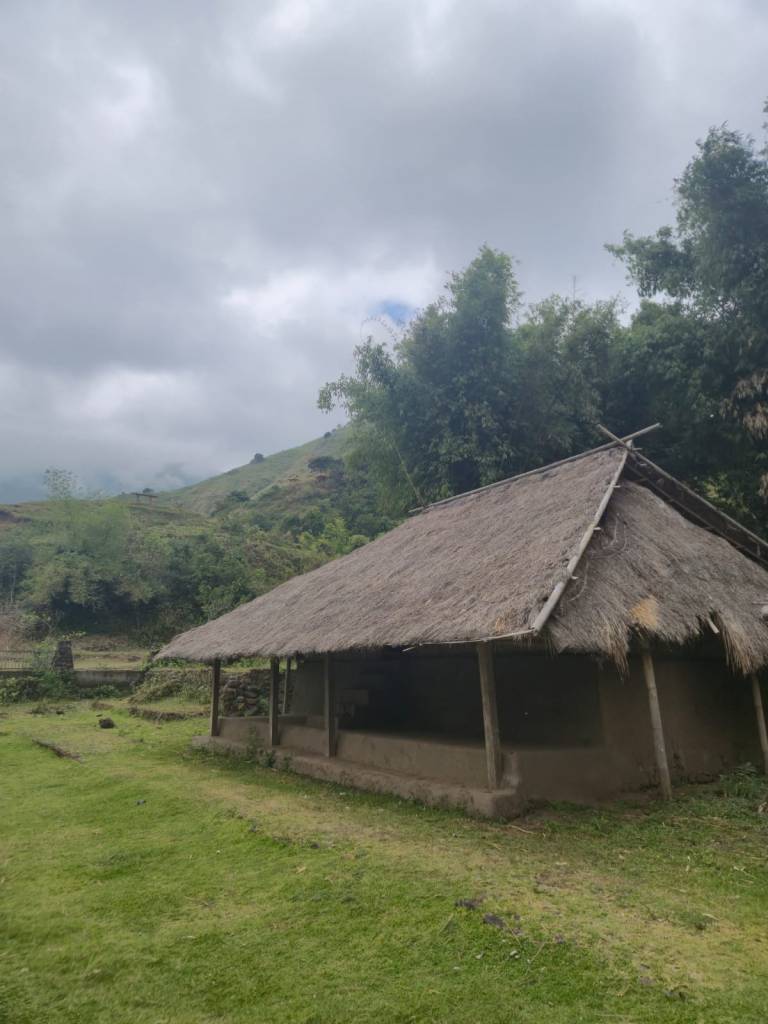
On our way back down, we came across Desa Adat Beleq, an old traditional village at the foot of the hills. I was intrigued to learn that it is considered the earliest settlement in Sembalun. According to local tradition, the village’s history is connected to seven families who settled in the area following the massive eruption of Mount Samalas in 1257.
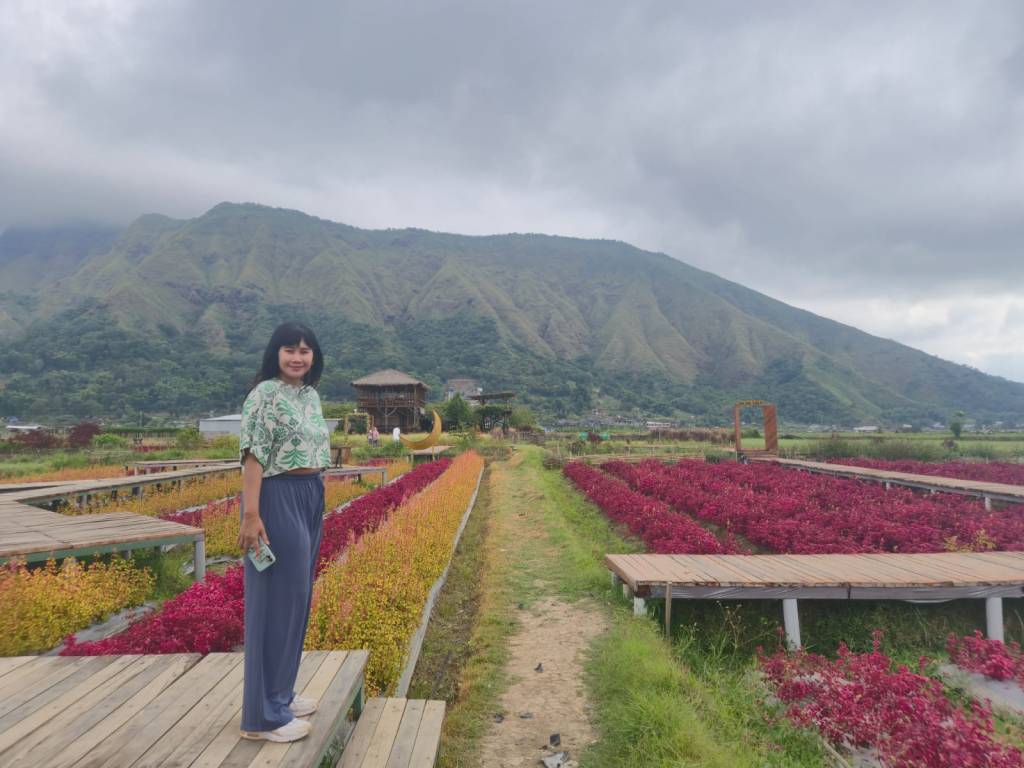
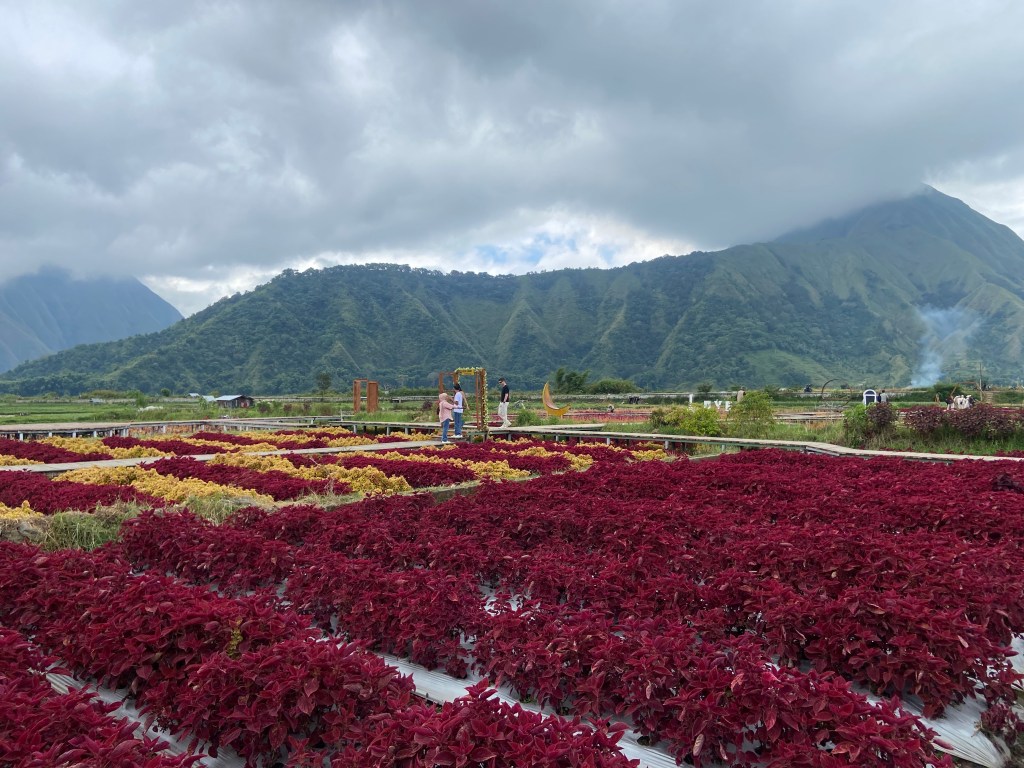
Before heading back to Kuta Lombok, we made one last stop at Kebun Bunga Sembalun, which literally means “Sembalun Flower Garden.” It seemed to be a particularly popular spot among Indonesian visitors, and I could easily understand why. Surrounded by colorful flowers with the mountains rising dramatically in the background, it was a lovely place to enjoy Sembalun’s scenery from a much closer distance. You can simply wander around the garden, take photos, and enjoy the mountain views, or even pick your own flowers for an additional fee. The entrance ticket was IDR 30,000 per person when we visited.
5. Desa Adat Sade
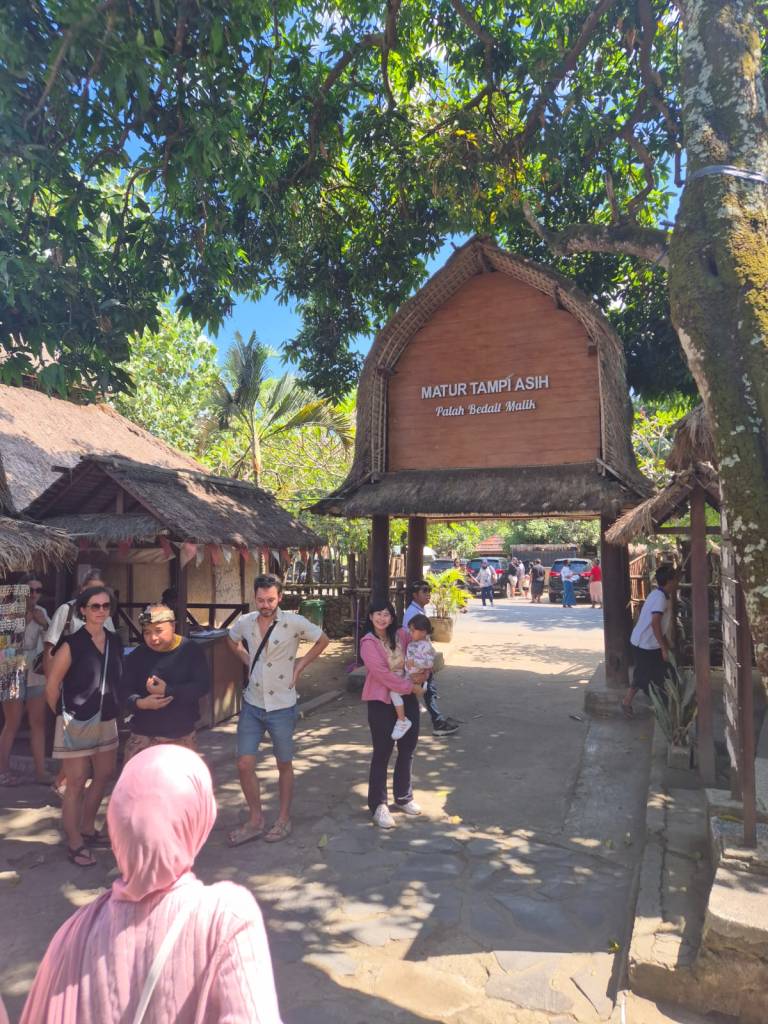
Lombok is home to the Sasak people, one of Indonesia’s many ethnic groups, so it would have felt like a big loss to leave the island without experiencing some of their culture. That’s why we visited Desa Sade, one of Lombok’s best-known traditional Sasak villages, located only around 10 minutes from Kuta. Desa Sade consists of traditional houses with distinctive architecture, thatched roofs, and floors traditionally finished with a mixture that includes clay and cow or buffalo dung. Walking through the narrow paths between the houses gives you a glimpse into traditional Sasak architecture and village life.
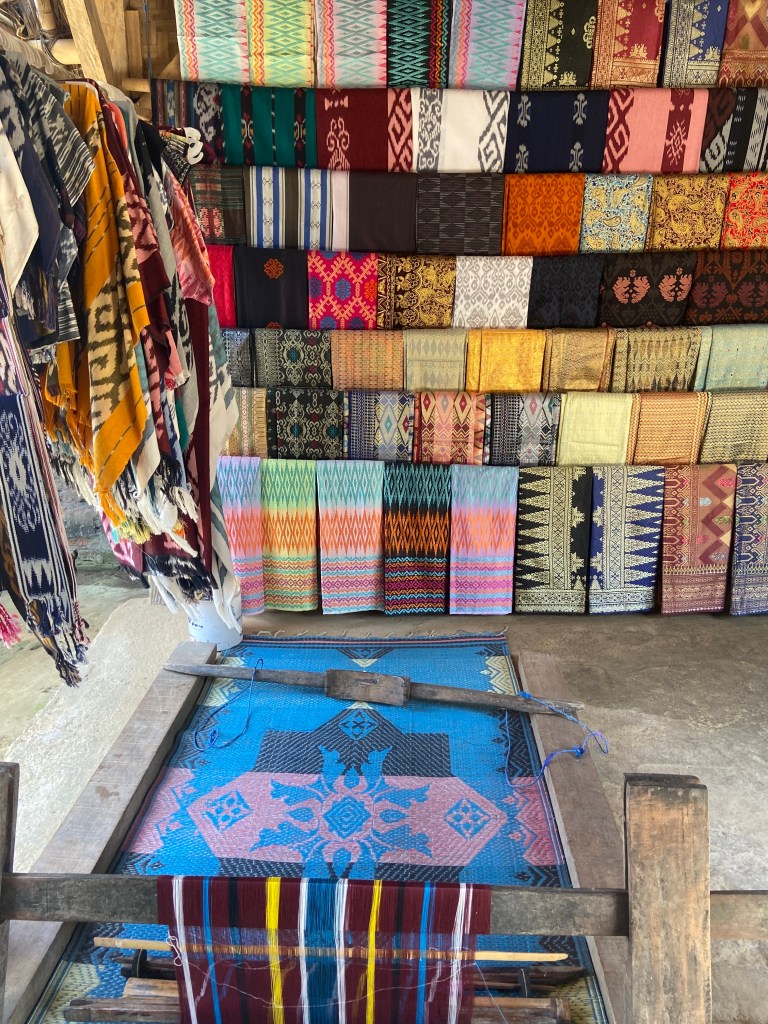
To be honest, though, Desa Sade felt quite touristy to me. Almost every house seemed to double as a small shop selling souvenirs and traditional woven textiles, while old weaving looms were displayed in front of many homes for visitors to see and photograph. After walking around for a while, I even started wondering: do people really still live their everyday lives here, or has the village become more of a tourist attraction? Still, it was interesting to see the traditional houses up close and learn a little more about Sasak culture. We spent around an hour exploring the village. There was no fixed entrance fee when we visited; instead, visitors were asked to make a donation, and we gave IDR 100,000,-
Sadly, Desa Sade suffered a devastating fire on August 22, 2026, shortly after our visit. The fire destroyed a large part of the traditional settlement, including dozens of homes, art shops, and community buildings, leaving hundreds of residents affected. sincerely hope Desa Sade can rise again, not simply as a tourist attraction, but as a living home where Sasak architecture, traditions, and culture can continue for generations.
Spending a week in Lombok felt like I had only scratched the surface. There is still a long list of places I want to explore the next time I return, from Lombok’s spectacular waterfalls and to simply slowing down for a few days at one of the family-friendly resorts in Senggigi. Lombok is such a gorgeous island with so much potential, yet it still remains relatively under the radar and underdeveloped compared to Java & Bali. As tourism continues to grow, I hope it will bring better infrastructure, transportation, and facilities across the island, while still preserving the pristine beaches and dramatic landscapes that make Lombok, Indonesia so special in the first place.
Curious about my adventures in Europe and America ?. You can click the following links to see my traveling videos that have aired on Net TV :
- Desa Hallstatt, Desa dengan Arsitektur Klasik di Pinggir Danau
- Imutnya Park Guell, Dunia Fantasi Ala Gaudi di Barcelona
- Ada Turki Mini di Bosnia Herzegovina
- Nyobain Makanan Khas Bosnia, Kaya Rasa dan Pasti Halal
- The Bean, Seni Kontemporer yang Ada di Film – film Hollywood
Want to help support my travel? Help me to visit 50 more countries and write more travel stories & guides by donating here
Watch my adventures & subscribe to my YouTube channel: The Island Girl Adventures

