
Canggu, Bali, has become heavily Westernized in recent years. Drive along its streets and you’ll find rows of Mediterranean-style Canggu villas, minimalist cafés, trendy boutiques, and sleek co-working spaces. The traditional Balinese architectural style has become a rarity, a quiet whisper beneath the hum of modern development. This stands in stark contrast to the Bali of the 1990s and early 2000s, when most travelers came to the island seeking spiritual depth, cultural encounters, and the charm of local traditions. Today, particularly in Canggu—now a mecca for digital nomads in Southeast Asia—people fly thousands of kilometers to live the remote work dream: typing away in beachfront cafés, sipping smoothies, and enjoying a Western lifestyle at a fraction of the cost. This shift has undeniably fueled Canggu’s rapid transformation.
Still, I found myself craving a glimpse of Bali’s cultural soul without having to drive all the way to Ubud or brave the traffic to Uluwatu just to catch a Kecak dance. Determined to find something closer to home, I turned to the internet in search of a Balinese cultural performance in or around Canggu Bali. That’s when I stumbled upon an article about the Cultural Evening at Hotel Tugu Bali. The idea sounded promising—authentic Balinese dance and music, just a short drive away. So, one evening, I invited my husband to come along with me and experience a traditional performance right in the heart of Canggu.
A Cultural Dining Experience. Where Bali’s Stories Are Served at the Table
On Thursday evening, we went to IWA Restaurant at Hotel Tugu Bali, where they host a Balinese cultural dining experience unlike any other in the area.
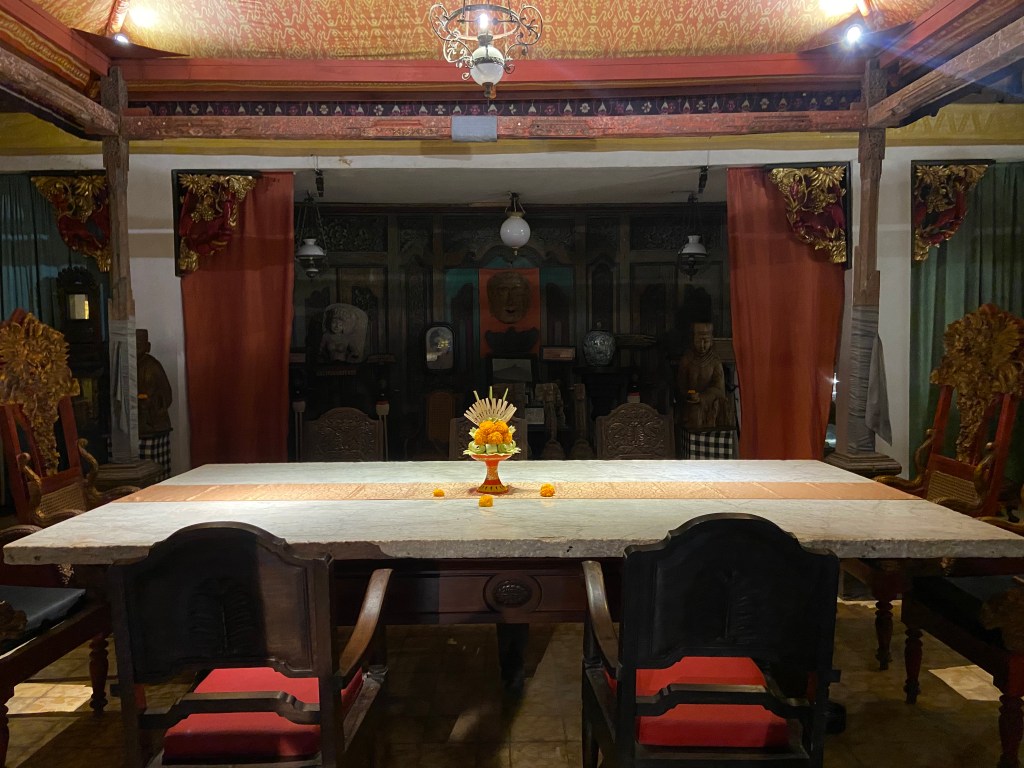
We arrived a bit early, and the staff at Hotel Tugu Bali kindly offered us a short tour of their uniquely conceptualized property. Our first stop was the Bale Puputan, an exclusive VIP dining room that was not only impressive in its decor but also rich in history. Inside, I was shown a remarkable collection of antique treasures—some of the last remnants preserved from the Puputan War, a tragic and heroic chapter in Balinese history. The Puputan refers to mass ritual suicides carried out by Balinese royals and their followers in defiance of Dutch colonization in the late 19th and early 20th centuries, especially during the events of 1906 and 1908. It was a heartbreaking yet powerful act of resistance, embodying the Balinese spirit of dignity over submission.
Among the fascinating items in the room was the largest whole marble table once used by Dutch generals to host royal guests, along with priceless black-and-white portraits of Balinese royals from centuries past. These artifacts offer a poignant window into Bali’s colonial past and royal heritage.
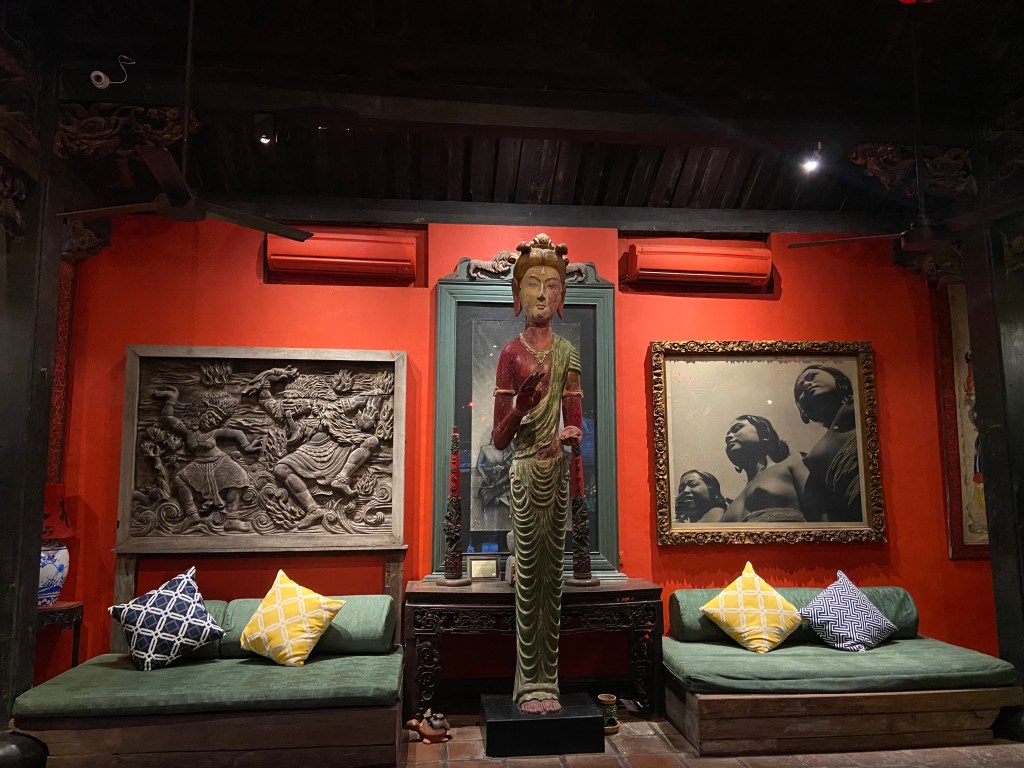
We were then led to another equally captivating room filled with historic artifacts from Bali, Java, and China—a rich mix of cultures and craftsmanship. Bale Sutra is the only place that is housed in an original ancient Kang Xi period temple from 1706. This 310-years-old Kang XI period temple was brought by Chinese immigrants to Bali a long time ago, was saved from near-demolition by the Tugu Hotels & Restaurants owner, and was transported and reconstructed in its entirety at Hotel Tugu Bali.
Honestly, I hadn’t seen such a compelling collection outside of Karangasem, where I had once visited some equally stunning and historic sites. For a hotel, this place felt like a living museum.
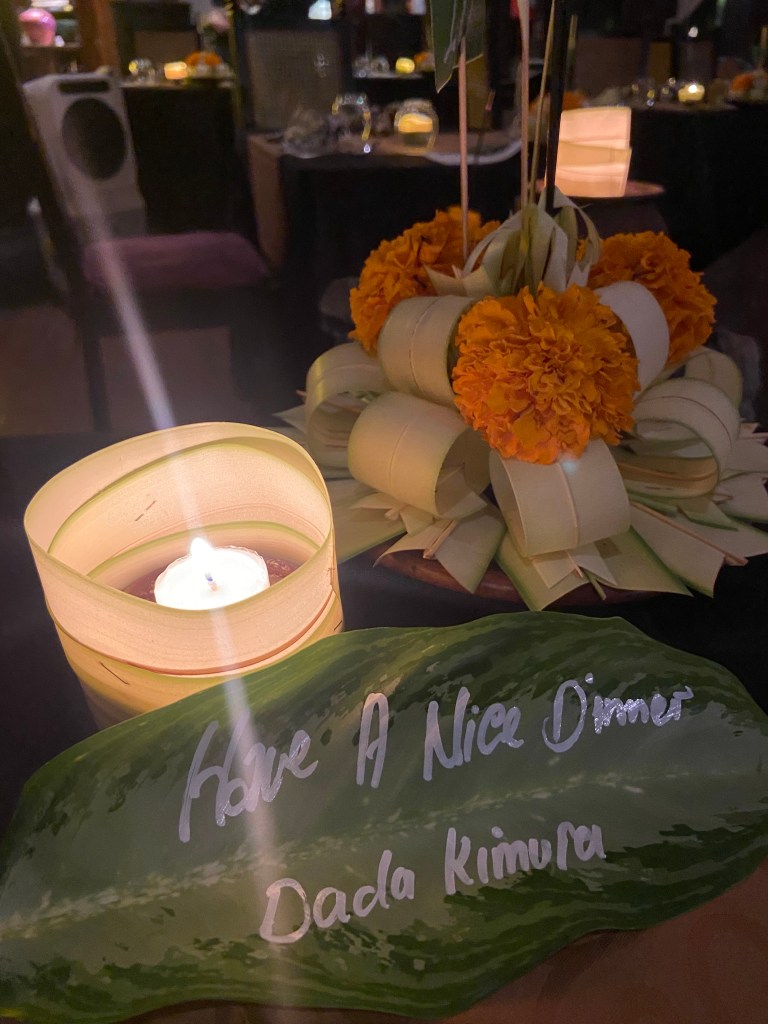
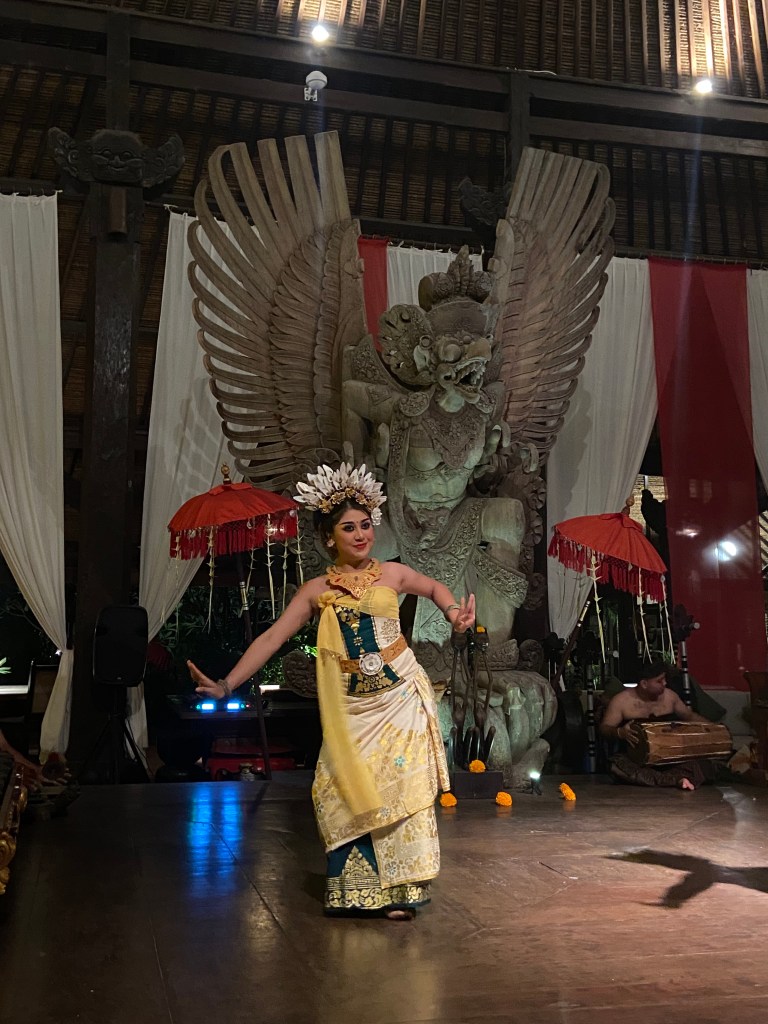
Approaching 7 PM, we ushered to the dining room. The Balinese traditional dances set inside a towering wooden hall inspired by royal Balinese palaces, Bale Agung Hall—an architectural homage for
dancers to perform age-old rituals once reserved for ceremonies or royal courts. Here we will dine as traditional dances and live performances unfold before us.
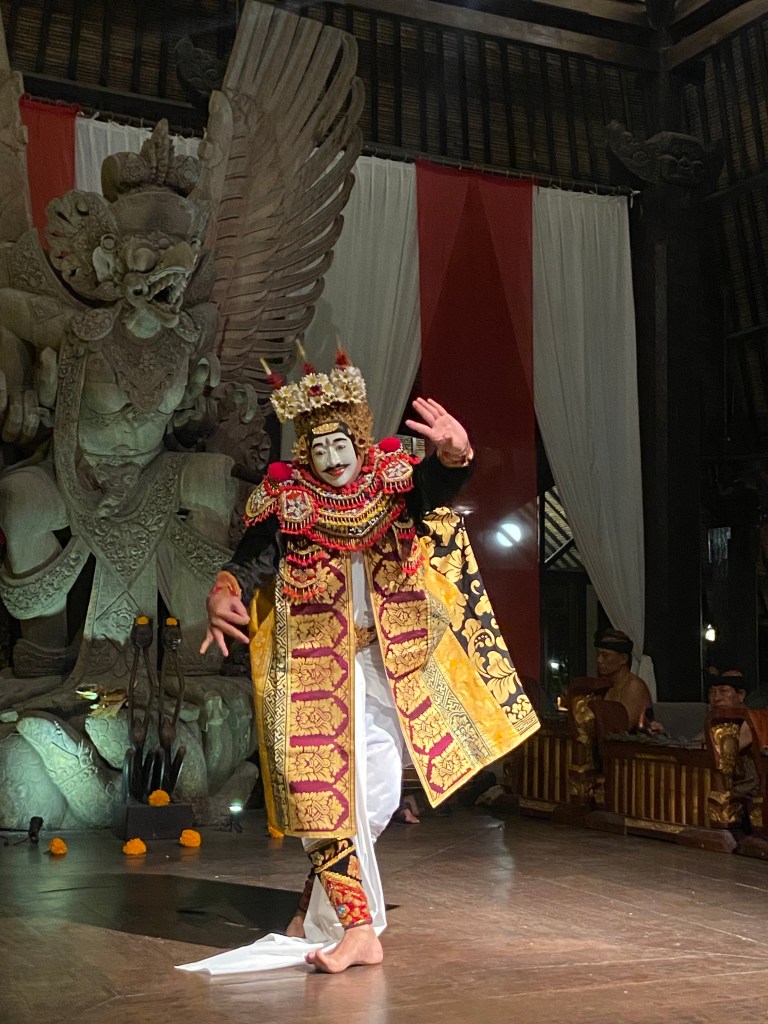
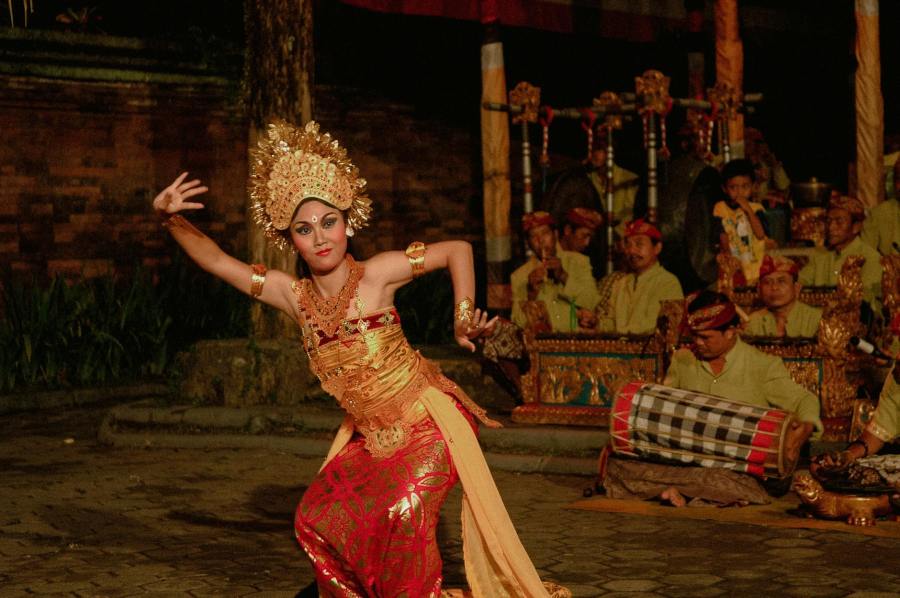
That evening, we were treated to three traditional Balinese dances: Sekar Jempiring, Topeng Dalem, and Kembang Girang.
The first, Sekar Jempiring, was performed by a young Balinese girl dressed in exquisite traditional attire. It depicts the beauty of the frangipani flower, also known as “Jepun” in Balinese, in various colors and shapes. The dance was inspired by the flower’s significance in Balinese culture, particularly its use in rituals and Hindu ceremonies, symbolizing purity and devotion. The dance is a visual representation of the flower’s beauty, including its branches, buds, and blossoms, through a variety of movements.
The second dance, Topeng Dalem, started after 15 minutes break. This masked dance, which dates back to the 17th century, is part of the Topeng tradition—a form of dance drama where performers don masks to portray ancestral figures and ancient tales. The character presented was Topeng Arsa Wijaya, representing a noble and wise king, embodying qualities such as intelligence, leadership, and grace. The performer’s measured movements conveyed both strength and serenity, breathing life into a role once meant for the royal court.
The final dance, Kembang Girang, was a joyful and expressive piece depicting a young girl’s coming-of-age and the emotions she experiences as she grows up. The choreography was full of charm and innocence, with a delightful energy that closed the evening on a lighthearted note.
As I watched the dances unfold, I felt transported—drawn into a world where every gesture had meaning, every sound from the gamelan carried emotional weight. The music was unfamiliar, yet grounding; the dances, slow and poetic, told stories that transcended language. These were not commercialized tourist shows, but rare cultural performances, reviving traditions that are increasingly difficult to find in modern Bali. And here they were—alive and flourishing, every Thursday night, in the heart of Canggu Bali.

To complement our exceptional evening steeped in Balinese culture, IWA Restaurant presented a beautifully curated selection of authentic Balinese and Indonesian dishes. We chose “The Congklak Dishes of the Indonesian Archipelago – Set 3”, a culinary journey that celebrates the rich and diverse heritage of the region.
Presented on a beautifully crafted congklak-inspired platter shaped like a dragon, the appetizer trio included: Lumpia Pecinan Sayur (crispy vegetable spring rolls), Cah Kangkung Ampenan (a fragrant stir-fry of water spinach), and Serundeng Kelapa Pesisir (a flavorful mix of roasted coconut, kaffir lime leaf, lemongrass, and galangal). Each bite offered a glimpse into the layered flavors that define traditional Indonesian fare.
For the main course, we indulged in two standout dishes: Rendang Kalam Wagyu, a melt-in-your-mouth slow-cooked wagyu beef infused with candlenut, red pepper, kaffir lime, ginger, and a rich coconut reduction; and Kare Ayam Asap, a comforting smoked chicken curry served with sautéed potatoes, crispy bacon, shimeji mushrooms, and mint leaves. Both mains were incredibly flavorful and tender—the kare ayam especially was a highlight, packed with depth and warmth.

We enjoyed each bite while the spellbinding performances unfolded before us. The fragrant yellow rice and an assortment of sambal added extra layers of flavor and heat, elevating the experience into a perfect balance of culture and cuisine.
To round off the evening, we were served ronde, a traditional Javanese dessert of warm ginger-infused broth and glutinous rice balls filled with sweet crushed peanuts. Comforting and nostalgic, the dessert brought a soothing close to our cultural and culinary journey. With every element thoughtfully presented, the entire dining experience—centered around the preservation of traditional Balinese performing arts—felt complete and deeply meaningful.
Cultural Destinations Near Canggu, Bali

The cultural night at Hotel Tugu Bali left a lasting impression. Who would’ve thought that such a captivating cultural performance still exists just steps away from Canggu Beach? While Canggu is often known for its beach clubs, trendy cafés, coworking spaces, Canggu accomodation, and sleek Canggu villas, there’s so much more beneath the surface. This experience reminded me that Bali’s cultural soul is still very much alive—if you know where to look. I’ve since put together a list of cultural destinations in and around Canggu, perfect for your next visit with friends or family. It’s a great way to add a meaningful Balinese cultural experience to your itinerary—without needing to leave the Canggu area.
- Tanah Lot
Perched dramatically on a rocky outcrop amidst crashing waves, Tanah Lot is one of Bali’s most iconic sea temples and a must-visit cultural destination near Canggu. Dedicated to the guardian spirits of the sea, the temple offers a breathtaking setting, especially during sunset when the silhouette of the shrine glows against the sky. While the site is popular with tourists, it remains a deeply spiritual place for locals, who continue to visit for prayer and ceremonies. Just a 30-minute drive from Canggu, Bali, Tanah Lot offers a powerful reminder of Bali’s enduring spiritual traditions.
2. Taman Ayun Temple – Mengwi Royal Temple
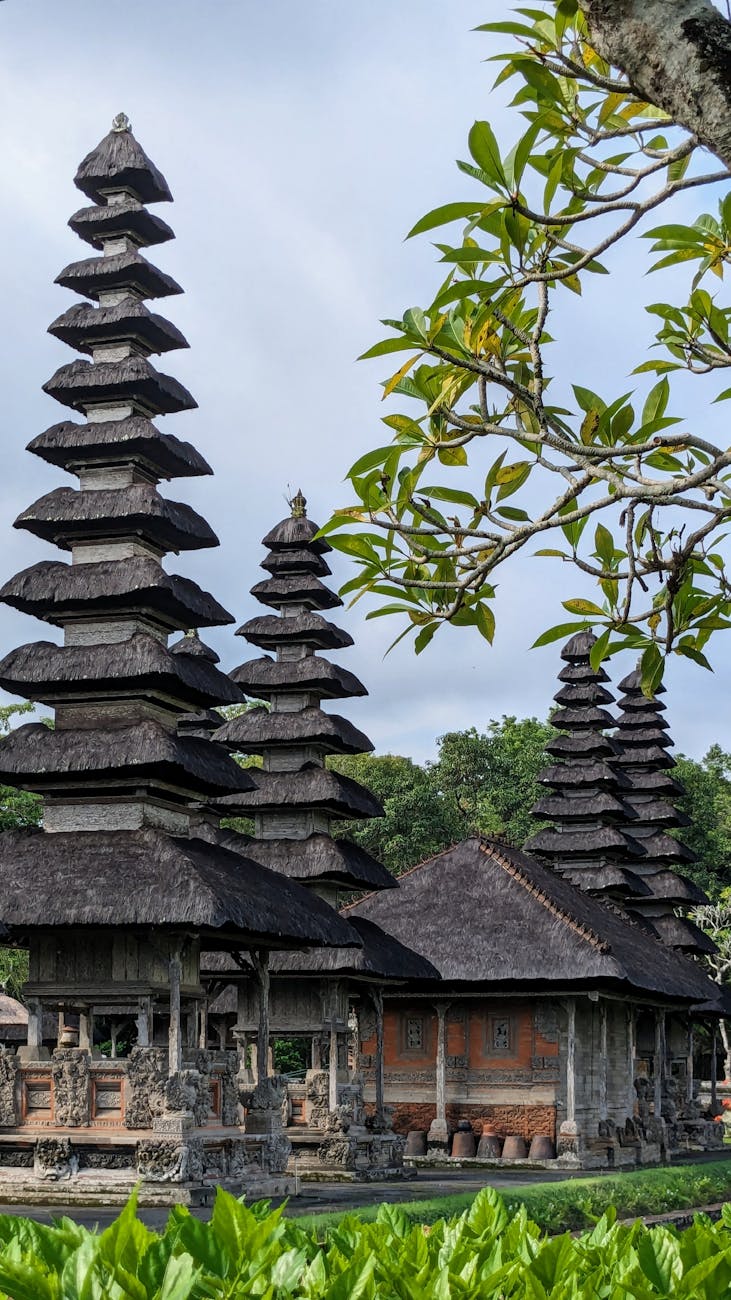
Surrounded by wide moats and lush gardens, Taman Ayun Temple in Mengwi is one of the most beautiful royal temple complexes in Bali. Built in the 17th century by the King of Mengwi, the temple served as the main family temple for the royal dynasty. Its multi-tiered pagoda-like shrines (meru) and serene landscaped setting make it a peaceful retreat and an excellent example of Balinese temple architecture. Located about 40 minutes from Canggu, Bali, this UNESCO-recognized site offers a quieter, more contemplative cultural experience.
3. Subak Museum, Tabanan

If you’re curious about Bali’s ingenious irrigation system and the philosophy behind its terraced rice fields, the Subak Museum in Tabanan is the place to go. The museum is dedicated to the Subak system—a UNESCO-recognized traditional water management practice that reflects the Balinese philosophy of harmony between humans, nature, and spirit (Tri Hita Karana). About 45 minutes from Canggu, the museum offers both indoor and outdoor displays, showcasing tools, diagrams, and even a replica of a farmer’s hut, giving visitors a deeper understanding of Bali’s agricultural heritage.
4. Seseh Village
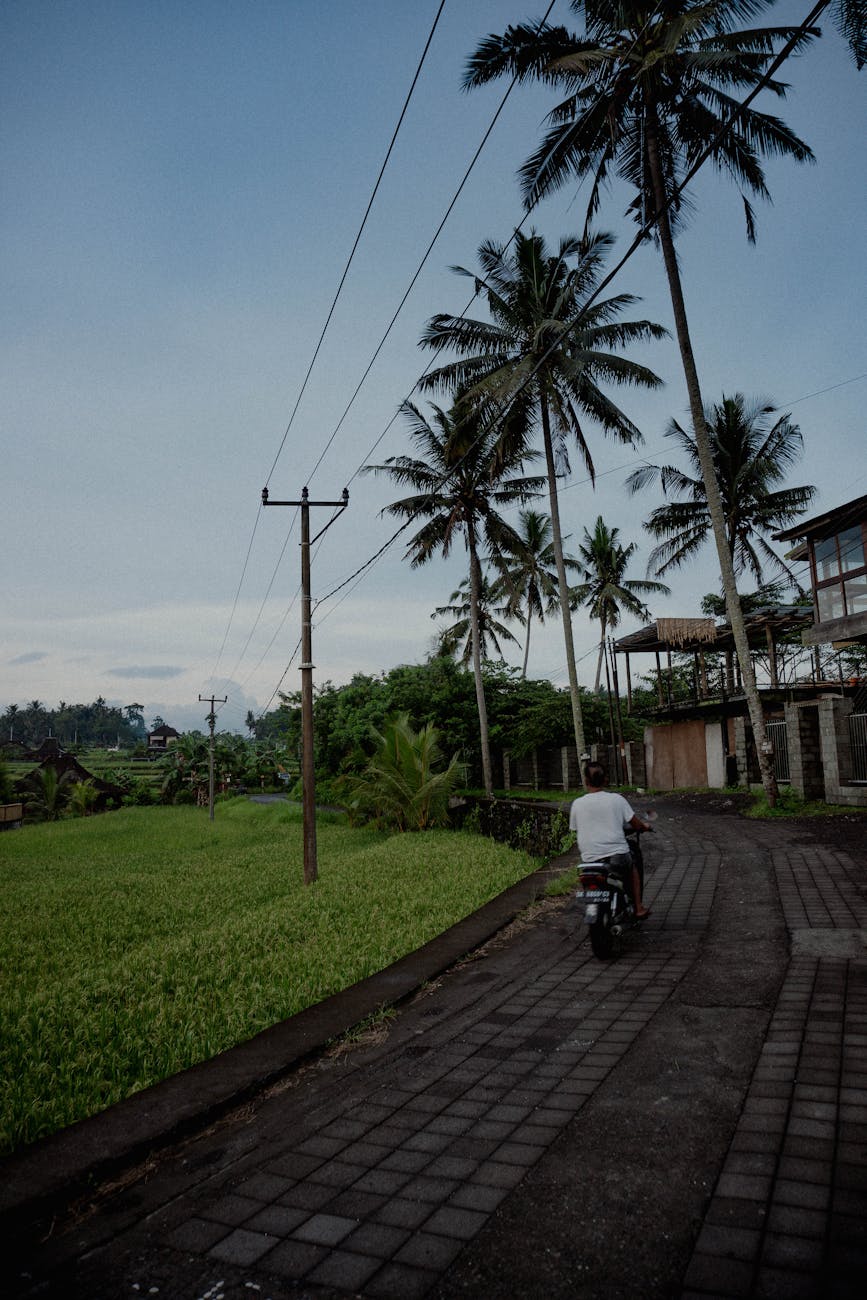
Just a short drive from the hustle and bustle of Canggu Bali, Seseh Village offers a peaceful glimpse into traditional Balinese rural life. Surrounded by rice fields and small temples, this charming village remains largely untouched by mass tourism. Here, you can observe daily rituals, walk through lush paddies, and connect with the slower rhythm of village life. Only 20 minutes away, Seseh is perfect for a half-day escape to experience the quieter, authentic side of Bali that still thrives just beyond Canggu’s trendy scene.
Exploring these nearby gems proves that we don’t have to travel far to experience the richness of Bali culture. Whether you’re staying in Canggu, Bali for the surf, cafes, or remote work vibes, taking a little time to connect with the island’s traditions adds depth and meaning to your journey. Sometimes, the soul of Bali is just around the corner—you just have to look beyond the beach.
Curious about my adventures in Europe and America ?. You can click the following links to see my traveling videos that have aired on Net TV :
- Desa Hallstatt, Desa dengan Arsitektur Klasik di Pinggir Danau
- Imutnya Park Guell, Dunia Fantasi Ala Gaudi di Barcelona
- Ada Turki Mini di Bosnia Herzegovina
- Nyobain Makanan Khas Bosnia, Kaya Rasa dan Pasti Halal
- The Bean, Seni Kontemporer yang Ada di Film – film Hollywood
Want to help support my travel? Help me to visit 50 more countries and write more travel stories & guides by donating here
Watch my adventures & subscribe to my YouTube channel: The Island Girl Adventures
 The Island Girl Adventures
Wonderful.
LikeLike
Bali is indeed wonderful. Thanks for reading
LikeLike
Yeah . I love this place.
LikeLike
thanks for reading
LikeLiked by 1 person
I became your fan.
LikeLiked by 1 person